
Last updated November 17, 2026
 Furnace & heating
 Heat pumps
 Ductless mini splits
 Carrier
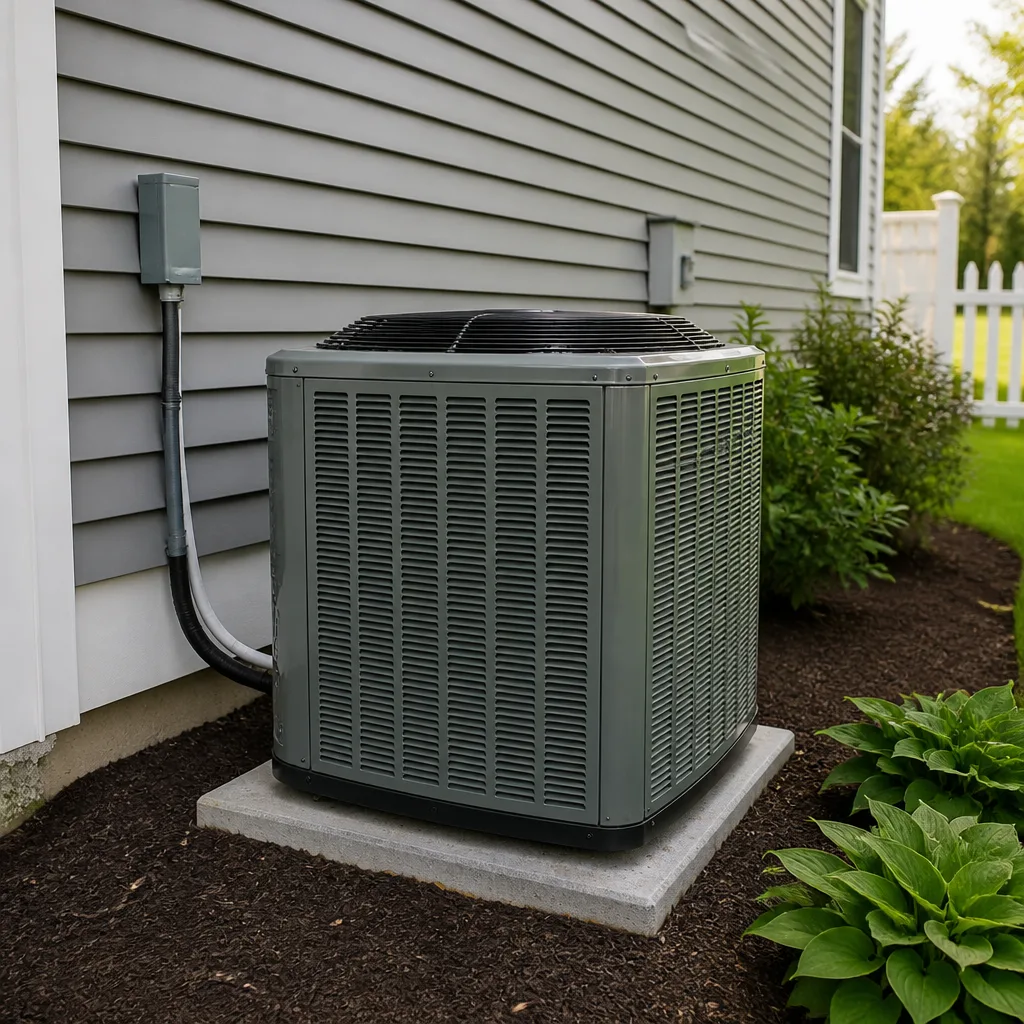 Trane
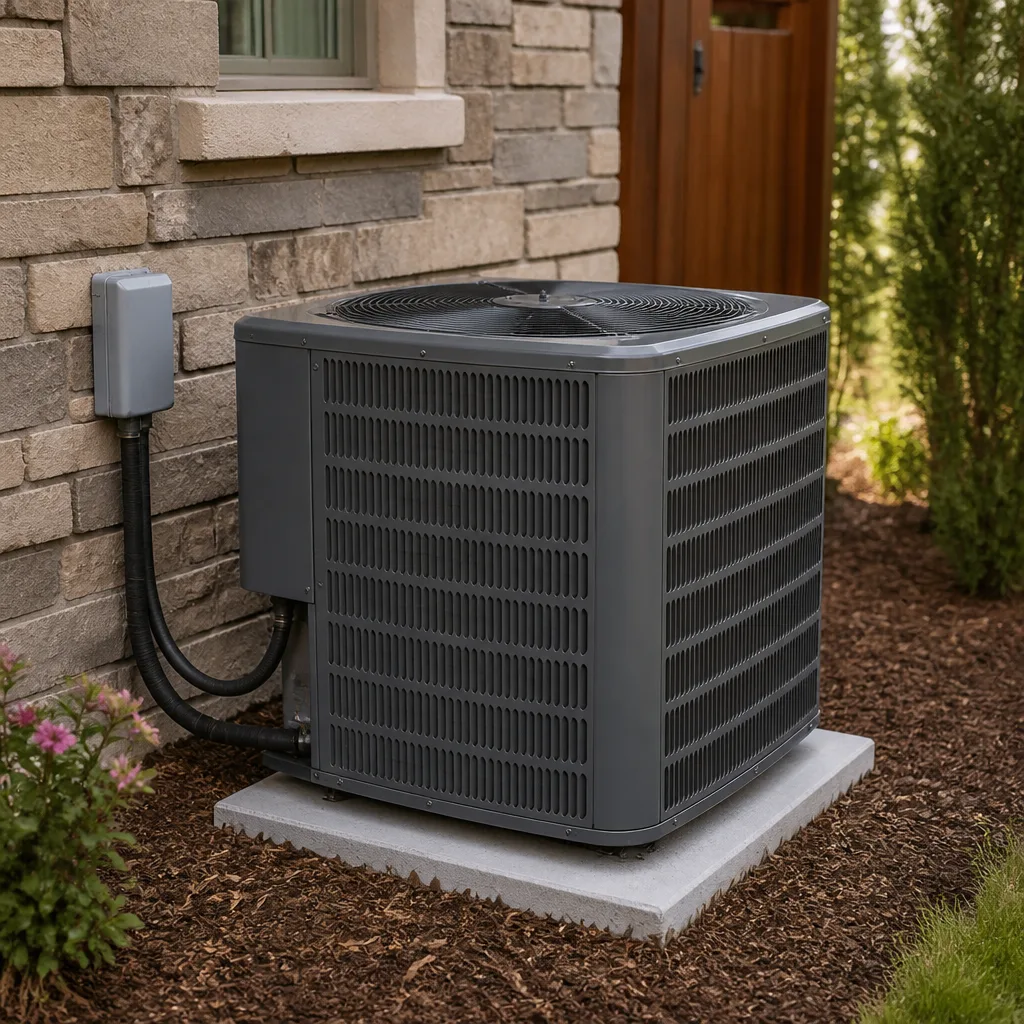 Goodman
Seasonal tune-up and full diagnostic on your Carrier, Trane, or Goodman system - readings shown to you before any repair is proposed
Diagnosis first, numbers second - you approve the repair price before a single part goes in.
Get your free estimateAC Repair Troubleshooting in Whitney: Common Problems and How to Fix Them
The most expensive word in AC repair is “I think” – as in, “I think it just needs refrigerant.” Refrigerant loss is a symptom, not a diagnosis, and treating it as the problem adds cost without fixing anything. When a system blows warm air, ices over, or short cycles, the failure you notice is rarely the component that failed. This guide maps the symptoms Whitney homeowners actually describe over the phone to the mechanical sources that usually produce them, so you can tell an airflow problem from a refrigerant problem, recognize what each sound means, and walk into a service call knowing what you’re dealing with instead of guessing.
Quick Answer
Most AC problems in Whitney trace back to one of five sources: restricted airflow from a clogged filter or blocked coil, low refrigerant from a leak, a failing capacitor or contactor, a dirty condenser coil struggling against desert heat, or a blower motor on its way out. Warm air, short cycling, ice buildup, odd noises, and rising electric bills each point to specific components, and matching the symptom to the source before you call saves diagnosis time and prevents the wrong repair.
Call (888) 691-6715 for a free estimate. We answer 24/7. Fast dispatch from 7am to 7pm, Sunday through Friday.
Styles & brands we work with
- AC installation
- Furnace & heating
- Heat pumps
- Ductless mini splits
- Carrier
- Trane
- Goodman
Table of Contents
- Symptom-to-Component Matrix: What Your AC Is Telling You
- Why Is My AC Blowing Warm Air?
- Short Cycling: When the Unit Runs but Won’t Stay On
- Ice Buildup on the Coil or Line Set
- Clicking, Grinding, Hissing, Rattling: What Each Sound Means
- High Electric Bills: The Hidden Cooling Problem
- Refrigerant Problem or Airflow Problem? How to Tell
- What You Can Safely Check Yourself vs. What Needs a Technician
- What to Document Before You Call
Symptom-to-Component Matrix: What Your AC Is Telling You
Every cooling complaint a Whitney homeowner describes points to a small cluster of mechanical suspects. The matrix below is the same logic our technicians work through on arrival, and it’s the fastest way to understand what you’re likely facing before anyone touches the system.
- Warm air from vents, compressor not running: failed capacitor, tripped breaker, blown contactor, or a low-pressure safety shutoff caused by refrigerant loss.
- Warm air, but outside unit is humming and running: low refrigerant charge, blocked condenser coil, or a failing compressor.
- Short cycling (on and off every few minutes): oversized system, restricted airflow causing the coil to freeze, thermostat placement problem, or a failing pressure switch.
- Ice on the indoor coil or refrigerant lines: low refrigerant or restricted airflow – both cause the coil to drop below freezing.
- Grinding or screeching: blower motor bearings or compressor internals.
- Hissing or bubbling: refrigerant escaping from a leak in the line set or coil.
- Clicking at startup: contactor engaging, or a capacitor too weak to start the compressor.
- Rattling or vibration: loose panels, a failing fan blade, or debris in the outdoor unit.
- High bills with mediocre cooling: dirty condenser coil, failing blower, or a system losing charge slowly.
Notice that low refrigerant appears three times. It’s genuinely common, but it’s also the symptom homeowners misdiagnose most often. A system that needs refrigerant has a leak. Adding refrigerant without finding the leak is a temporary patch, not a repair.
Why Is My AC Blowing Warm Air?
Warm air means the system is moving air but not removing heat from it. That narrows the problem to the compressor circuit or the refrigerant charge itself. The question is whether the outdoor unit is running at all.
If the outdoor unit is silent: you’re looking at an electrical fault, not a cooling fault. A failed start capacitor, a tripped breaker, or a blown contactor stops the compressor from engaging. Capacitors are inexpensive parts, and they fail routinely in the heat. A technician can confirm a bad capacitor in minutes with a meter.
If the outdoor unit is running but the air stays warm: the compressor is working but the refrigerant circuit isn’t doing its job. That usually means low charge from a leak, a restricted metering device, or a compressor that’s lost efficiency. Low refrigerant is the classic culprit, and it’s also why the “just top it off” approach is short-sighted – the leak is still there.
If the outdoor unit runs but the indoor blower doesn’t: air isn’t moving across the coil, so you’re feeling fan-driven room-temperature air. A dead blower motor or a bad run capacitor on the blower will do exactly this.
Whitney summers push these systems hard, and a capacitor that would limp along in milder climates often gives out here during a heat spike. When you call, tell us whether the outside unit is running, silent, or humming without the fan spinning, and we’ll arrive prepared. Repairs like this fall squarely under AC repair.
Short Cycling: When the Unit Runs but Won’t Stay On
Short cycling is the unit turning on and off in short bursts – often every three to eight minutes instead of completing a proper cooling cycle. It wears out compressors fast because the motor never gets to run at steady state. There are four common causes:
- Restricted airflow. A clogged filter or a partially blocked return cuts airflow, the evaporator coil gets too cold, and the system cycles on a low-pressure or freeze protection switch. This is the cheapest possible cause and the one to check first.
- Low refrigerant. A low charge triggers the low-pressure switch to shut the compressor down as a protective measure. The unit restarts, trips the switch again, and repeats.
- Oversized system. An AC that’s too large for the square footage cools the air fast but never runs long enough to pull humidity out. You get cool, clammy rooms and constant cycling. This is a sizing problem from the original install, and it’s why load calculation matters.
- A failing thermostat or pressure switch. Sometimes the switch itself is bad and shuts down a perfectly healthy compressor.
Short cycling is the one symptom where the cause could be a five-dollar filter or a compressor on its last leg. That’s exactly why we check airflow before anything else – ruling out the simple cause first keeps the repair honest.
Ice Buildup on the Coil or Line Set
Ice on an AC is counterintuitive, and it’s the most misunderstood symptom in the trade. Ice forms when the evaporator coil drops below freezing, and that happens for only two reasons: not enough refrigerant pressure, or not enough warm air moving across the coil. Both freeze the coil, and both produce identical-looking ice.
Here’s the trap. Homeowners see ice, assume the system is “overcooling,” and shut it off until morning. When it melts, the system runs fine for a few days, then ices again. That cycle repeats until the compressor dies from liquid refrigerant slugging or the unit shuts off entirely. The ice was never the problem – it was the warning.
What to do when you see ice:
- Turn the system off at the thermostat. Running an iced system can damage the compressor.
- Let it thaw completely, keeping the fan on to speed it up.
- Replace the air filter if it’s visibly loaded.
- Call for diagnosis. Ice alone doesn’t tell you whether the root cause is airflow or refrigerant, and guessing at the wrong one wastes a service call.
In Whitney, where the dry heat drives systems to run long cycles and pull maximum heat load, an undercharged system ices faster than it would in a milder climate. If your unit ices repeatedly, treat it as a refrigerant leak until a technician proves otherwise.
Clicking, Grinding, Hissing, Rattling: What Each Sound Means
Sounds are diagnostics. In our experience, homeowners describe them in a specific order of urgency once they understand what each one points to. Here’s what each actually means inside the unit.
- Clicking at startup (one click): the contactor closing. This is normal. Rapid, repeated clicking suggests a weak capacitor or a control board cycling.
- Loud clunk at startup: the compressor trying to start with a failing capacitor. Repeated clunks lead to a locked rotor and a dead compressor.
- Screeching or squealing: a blower motor bearing failing, or a belt (on older systems). This gets worse quickly.
- Grinding: metal-on-metal – usually the compressor or the outdoor fan motor. Grinding means shut it down and call.
- Hissing or bubbling: refrigerant escaping. Bubbling at the line set often means a leak. Hissing at the indoor coil can mean the coil itself is compromised.
- Rattling or vibrating: usually the least serious – a loose panel, debris in the outdoor unit, or a fan blade that’s out of balance. Still worth checking, because a loose blade can damage the coil.
The rule of thumb: grinding, metallic banging, or anything that smells like an electrical burn means shut the system down and call right away. Clicking and rattling can wait for a scheduled appointment. Hissing almost always means refrigerant leak and shouldn’t wait long.
High Electric Bills: The Hidden Cooling Problem
A rising power bill with cooling that feels slightly less cool is the most commonly ignored AC problem in Whitney. Nothing sounds wrong, nothing looks broken, and the rooms are almost comfortable. The system is simply working harder to deliver less cooling.
Three things drive this pattern:
- A dirty condenser coil. The outdoor coil rejects heat to the air. In dusty desert conditions, that coil clogs with dust and cottonwood seed over a season. When the coil can’t breathe, the compressor runs hotter and longer to reject the same heat. This is the single most common efficiency loss we see in Whitney.
- A failing blower. A blower motor losing strength moves less air, and less air across the coil means less cooling for the same energy draw.
- A slow refrigerant leak. The charge drops gradually, the compressor works against it, and the system loses capacity without ever clearly failing. The bill climbs and the complaint becomes “it used to cool better.”
This is where AC-only specialization matters. A general contractor sees “high bills” and could spend time on ductwork, insulation, or window advice. We see high bills and go straight to the coil, the charge, and the blower – the three things that actually determine how efficiently a compressor moves heat. If a coil is dusty but otherwise healthy, coil cleaning and a filter change often recover the lost efficiency with no parts replaced.
Refrigerant Problem or Airflow Problem? How to Tell
This is the distinction homeowners most often get backwards, because both produce the same headlines: poor cooling, ice, short cycling. The best guide is which symptoms cluster with which cause.
Signs of a refrigerant problem:
- Ice that keeps coming back even after a clean filter
- Hissing or bubbling at the line set
- The system cools better in the morning than in peak afternoon heat
- A system that ices every few weeks regardless of filter condition
Signs of an airflow problem:
- Ice that appears only when the filter is dirty or the return is blocked
- Weak airflow at the vents – you can feel the vent with your hand and it’s a trickle instead of a strong stream
- The indoor blower hums but never seems to push hard
- Cooling that recovers fully after a filter change
The practical test: pull the filter and note when it was last changed. If cooling returns after a fresh filter, you likely have airflow trouble. If the filter is clean and the system still ices or runs warm, that pushes the diagnosis toward refrigerant. Refrigerant is a closed system – it doesn’t get “used up.” Any system that needs charge has a leak, which is why the fix is leak detection plus repair, not just topping off.
What You Can Safely Check Yourself vs. What Needs a Technician
Some calls are filter-and-thermostat fixes. Others involve high-pressure refrigerant and live electrical components and should never be a homeowner project. Here’s the honest line.
Safe to check yourself:
- The thermostat: is it set to COOL, set below room temperature, and in a mode the system can act on?
- The air filter: pull it, look at it against light, replace if it’s loaded.
- The breaker at the panel: is the AC breaker tripped, and does it hold when you reset it?
- The outdoor unit: is the fan spinning, and is the coil visibly clogged with dust or debris?
- Vent airflow: can you feel a strong stream at a supply vent?
Not safe to touch – call a technician:
- Anything inside the electrical panel or at the contactor and capacitor.
- Any refrigerant work. Refrigerant is under high pressure, requires gauges, reclaim equipment, and licensing to handle. Venting it or trying to recharge by eye is dangerous and illegal.
- Opening the compressor compartment or the indoor coil cabinet.
- A system that has tripped a breaker repeatedly – repeated trips mean a fault that could arc or overheat.
The line between these two lists is the reason fair troubleshooting matters. A homeowner who confirms the filter and breaker before calling saves the technician a step and gets a cleaner diagnosis. A homeowner who tries to handle refrigerant or electrical gets hurt or makes the repair more expensive. We’ve done enough diagnostic calls to know both happen every summer in Whitney.
What to Document Before You Call
The most effective way to speed up a diagnosis is a short report of what you’re seeing. A few minutes of notes turns a broad service call into a targeted one. Here’s what to capture:
- The exact symptom. Warm air, weak airflow, ice, a specific noise, or high bills – one line that describes it.
- What the outdoor unit is doing. Running with fan spinning, humming without fan, silent, short cycling, or tripping the breaker.
- When it started. After a filter change? After a power outage? During a heatwave? Right after a storm or dust event?
- What you’ve already checked. Filter condition, thermostat setting, breaker reset.
- The brand and model. This helps us walk in with familiarity with your equipment. We work on all nine major brands – Carrier, Trane, Lennox, Goodman, Rheem, York, Daikin, Bryant, and American Standard – so knowing the make means we know the common failure points.
- How old the system is and whether it’s been serviced recently. This shapes whether the fix is a repair or a real conversation about replacement.
Documenting these before you call means the estimator and the technician both arrive with a working hypothesis. In practice that shortens the visit, reduces parts guesses, and gets you back to comfort faster.
Common Mistakes to Avoid
- Adding refrigerant without finding the leak. Refrigerant is a closed system, so any loss means a leak exists. Topping off without leak detection pays for the symptom, not the fix.
- Running the system while it’s iced. Ice signals trouble; running through it can slug the compressor with liquid refrigerant and turn a cheap repair into a full replacement.
- Ignoring a dirty filter because the system “still works.” In Whitney’s dusty air, a loaded filter drives up bills and ices coils long before the system fails outright.
- Assuming an oversized system is a good system. A unit too large for the home cycles constantly, cools fast, and never dehumidifies – which feels cold and clammy at the same time.
- Resetting a tripped breaker repeatedly. Repeated trips point to a real electrical fault. Each reset is another chance for the fault to arc.
- Replacing a thermostat to fix a symptom that isn’t a thermostat. Warm air and no cooling are rarely thermostat problems unless the thermostat reads wrong or won’t engage the system.
- Waiting for the system to fail completely before calling. A system that ices, cycles, or runs warm is already asking for a maintenance visit. Catching it early keeps it out of emergency territory.
See the difference
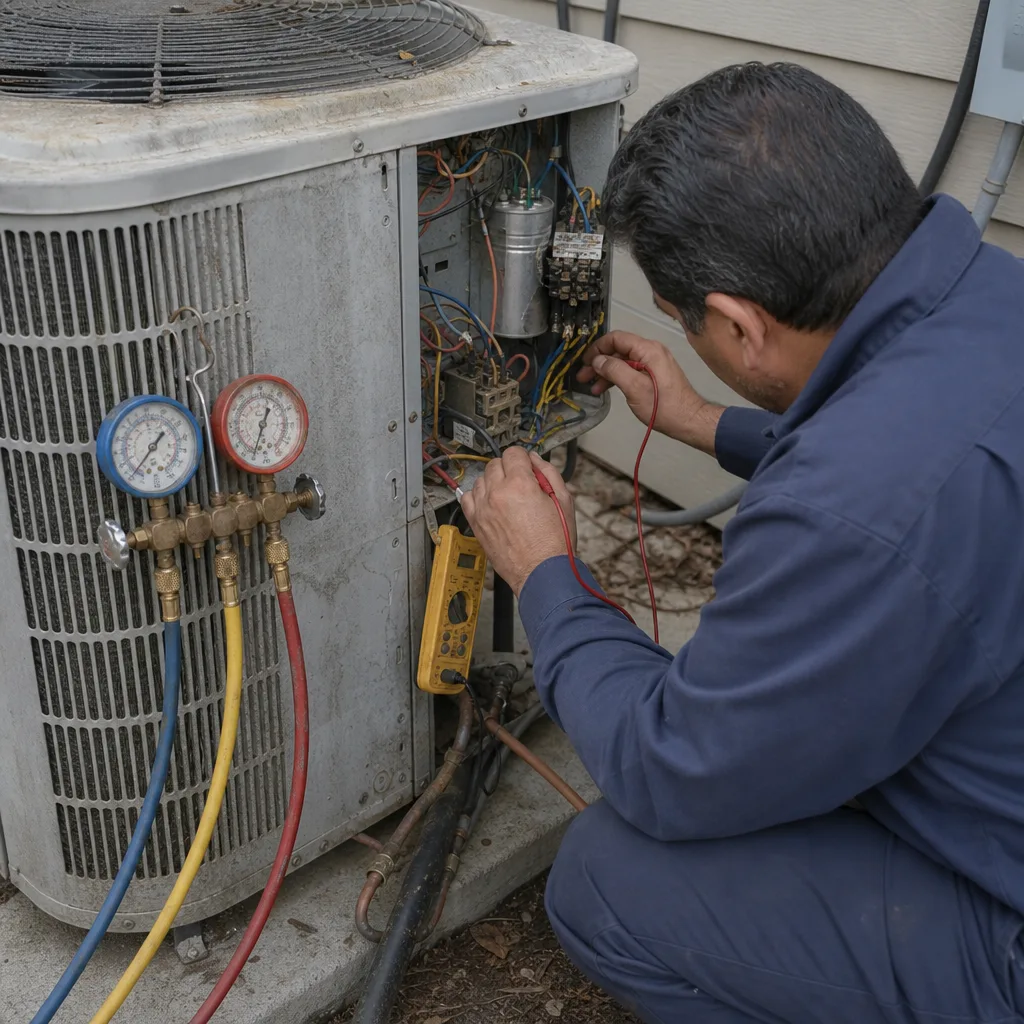 Before
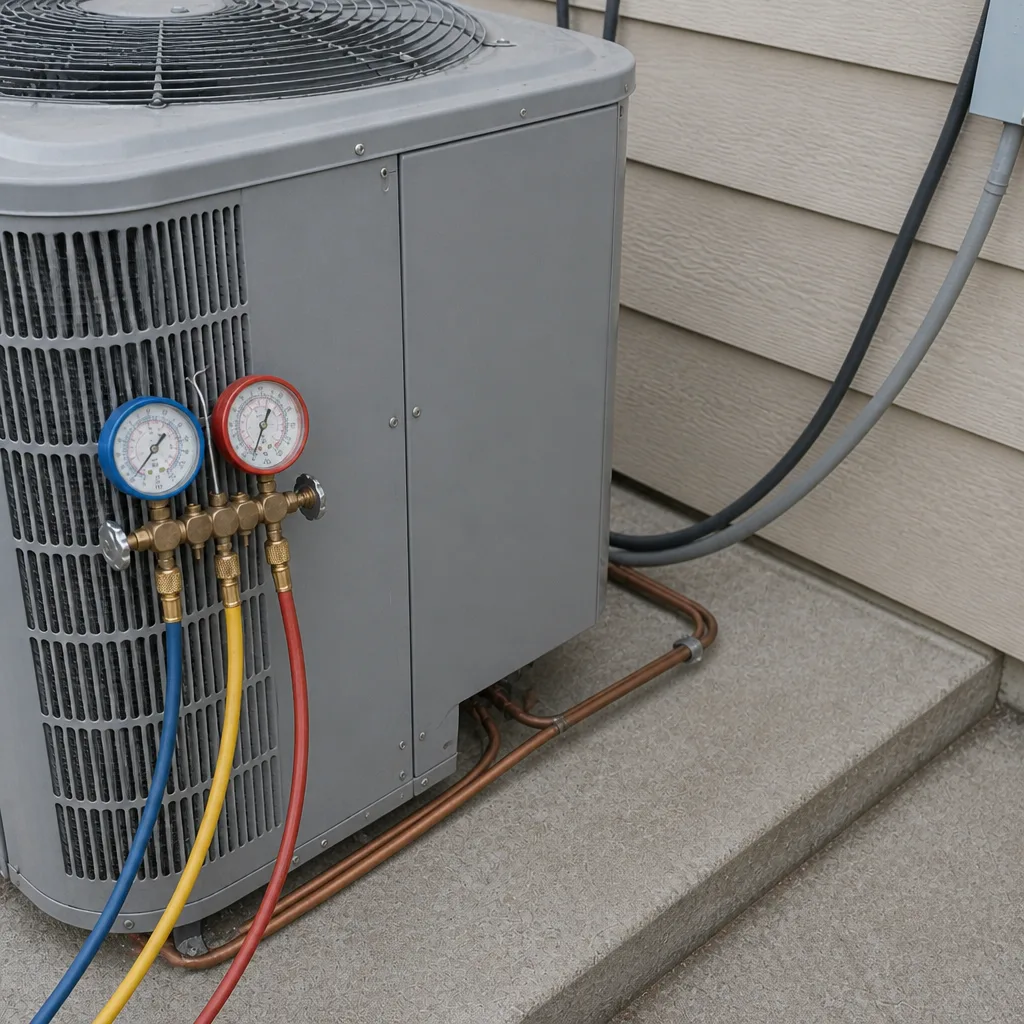 After
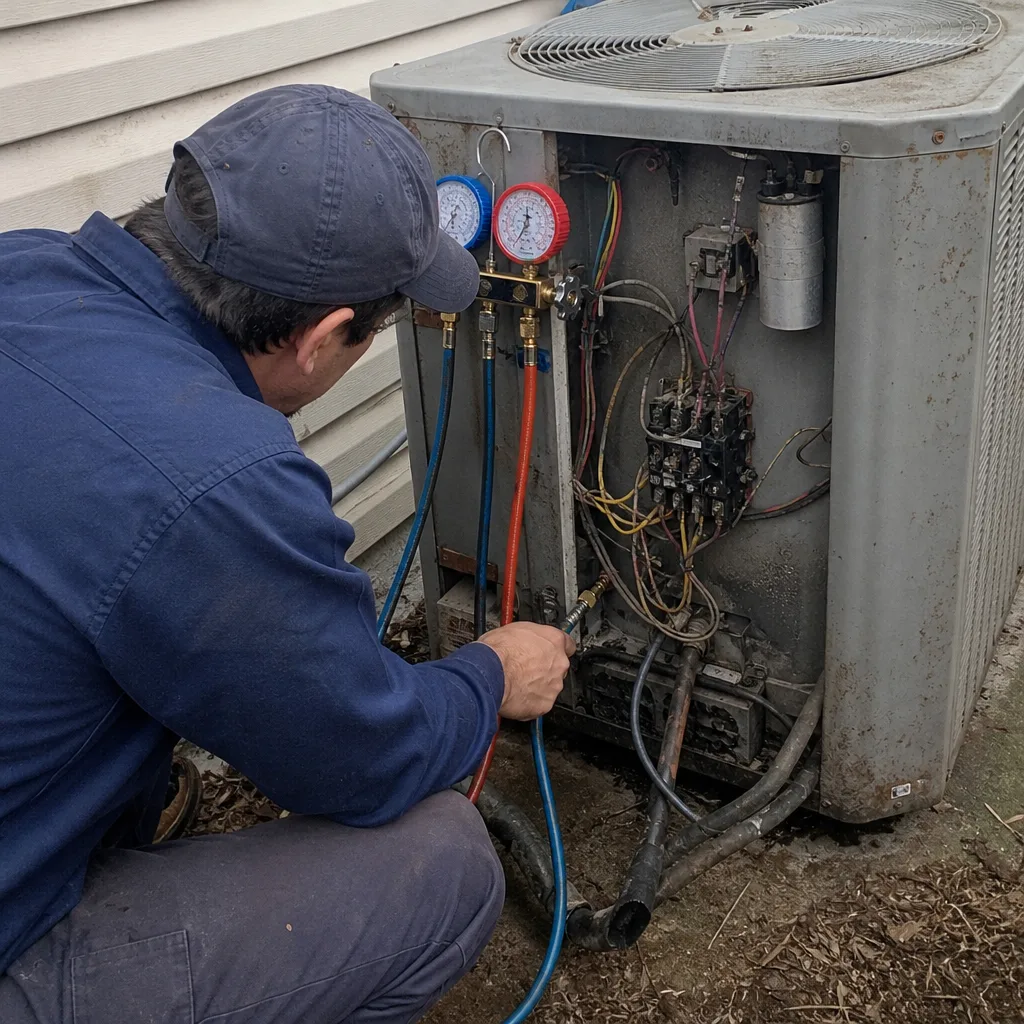 Before
 After
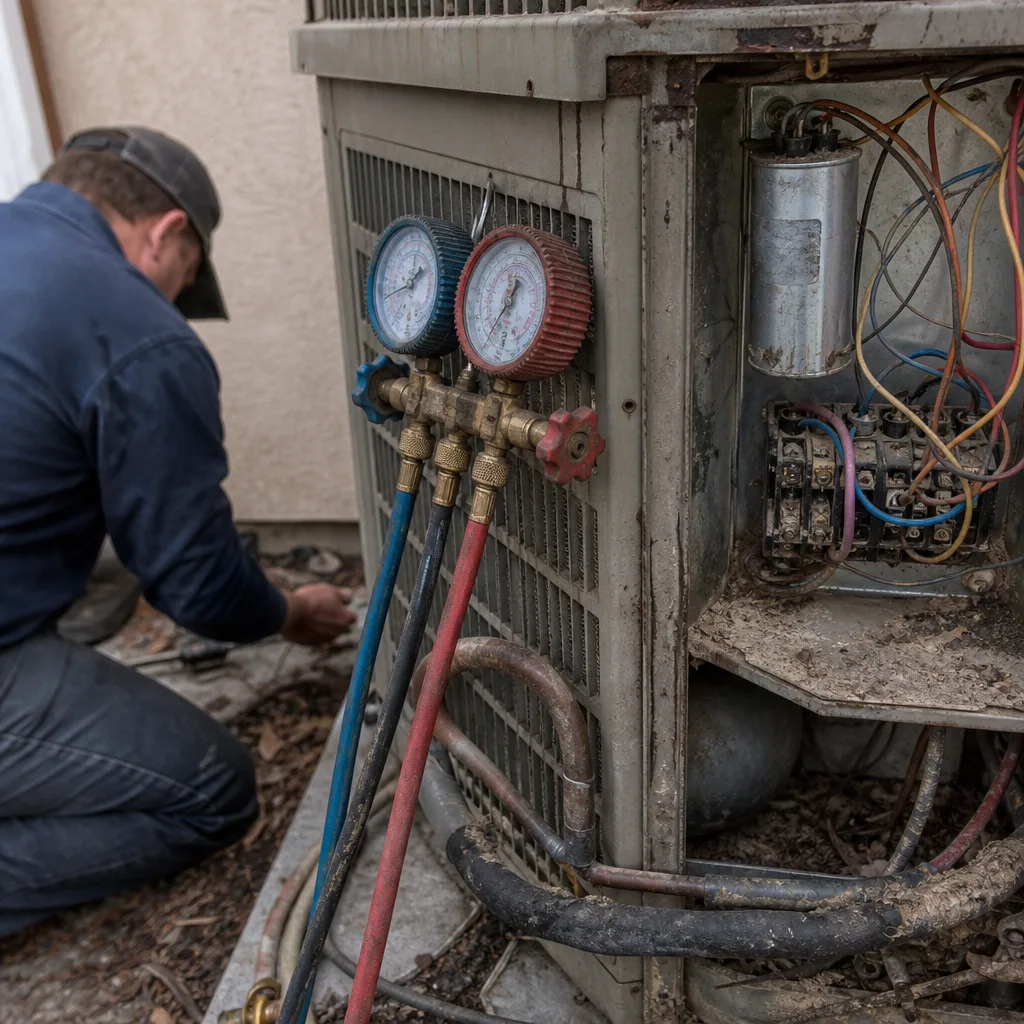 Before
 After
When to Call a Professional
Call a professional when the outdoor unit is silent or tripping the breaker, when you see ice that keeps returning after a filter change, when you hear grinding, banging, or a sustained hiss, or when your bills climb without a comfort reason. Those signs point to refrigerant, electrical, or compressor problems that only a trained technician can diagnose and repair safely. AC Repair Whitney offers free estimates in Whitney – call (888) 691-6715. Our technicians have up to 8 years of experience, and because AC is all we do, the diagnosis goes straight to the coil, charge, and compressor rather than getting lost in a broader trade. Repair, replace, or maintain – one call covers it.
Frequently Asked Questions
No – adding refrigerant treats a symptom, and refrigerant isn’t consumed by a healthy system. Any loss means a leak, and the actual repair is finding and fixing that leak before recharging. Adding refrigerant without repairing the leak means the system loses charge again and runs short, and the compressor pays the price. Call (888) 691-6715 for leak detection – estimates are free.
If a fresh filter doesn’t stop the ice, the likely cause is a low refrigerant charge or a failing blower, not airflow restriction. Low charge drops the coil below freezing and ice forms even with clean airflow. Icing is a warning that the coil is too cold, so turn the system off, let it thaw, and get it diagnosed before the compressor is damaged. Call (888) 691-6715 and we’ll find the source.
Resetting a tripped breaker once is safe, but if it trips again, stop and call. Repeated trips point to a short or a failing component that could arc or overheat. Don’t reset a breaker more than once and don’t tape it on. The fault behind a breaker trip is a technician’s job, and in Whitney that’s often a failing capacitor or contactor. Call (888) 691-6715 for diagnosis.
Grinding, metallic banging, or a smell of electrical burn means shut it down and call. Grinding is usually a compressor or fan motor failing, and banging can mean the compressor is self-destructing. Clicking and rattling can wait for a scheduled visit. Any noise that sounds like metal on metal is the stop-immediately kind. Call (888) 691-6715 and we’ll dispatch fast, 7am to 7pm, Sunday through Friday.
Yes – a clogged condenser coil forces the compressor to run hotter and longer to reject the same heat. In Whitney’s dusty desert air, that coil can load up in a single season, and the system quietly loses efficiency. Coil cleaning is part of what we check when bills climb without an obvious failure. Call (888) 691-6715 for an assessment; estimates are free.
Repair makes sense when the system is otherwise sound and the fix is a single part, like a capacitor, contactor, or motor. Replacement becomes the better call when the compressor is failing, the repair cost approaches a meaningful share of a new system, or the unit is leaking refrigerant repeatedly. Whitney’s heat stresses aging systems, and our techs give an honest recommendation without pushing a brand. Call (888) 691-6715 for a free estimate on both paths.
The Bottom Line
Most AC problems are diagnosable from symptoms long before a technician arrives. Warm air points to the compressor circuit or refrigerant charge, short cycling usually starts with airflow, ice means the coil is too cold for one of two reasons, and a climbing bill often hides a dirty coil or a slow leak. The fixes are specific and mostly safe to confirm: check the filter, check the breaker once, check vent airflow, then document what you find. Every symptom above is one we see in Whitney each summer, and the fastest way to a real repair is a clear symptom report, not a guess. Repair, installation, and maintenance – AC is all we do, and our technicians have up to 8 years of experience with the brands already in your home. For honest troubleshooting that leads to the right fix in Whitney, or to plan AC installation when repair no longer makes sense, our team is here.
Call (888) 691-6715 for a free estimate. We answer 24/7. Fast dispatch from 7am to 7pm, Sunday through Friday, with no overtime charge. Fast diagnosis, honest recommendation, all under AC Repair Whitney.
Written by the team at AC Repair Whitney.