
Last updated November 17, 2026
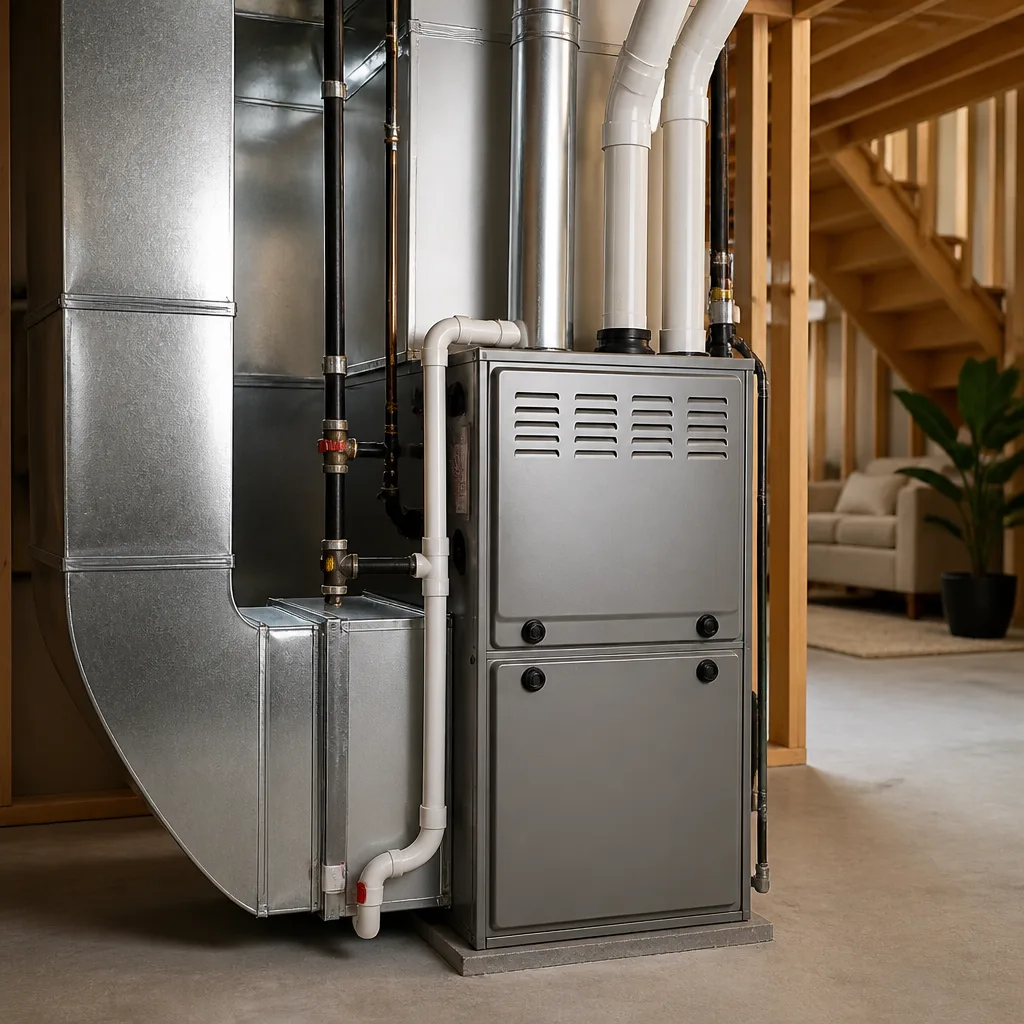 Furnace & heating
 Heat pumps
 Ductless mini splits
 Carrier
 Trane
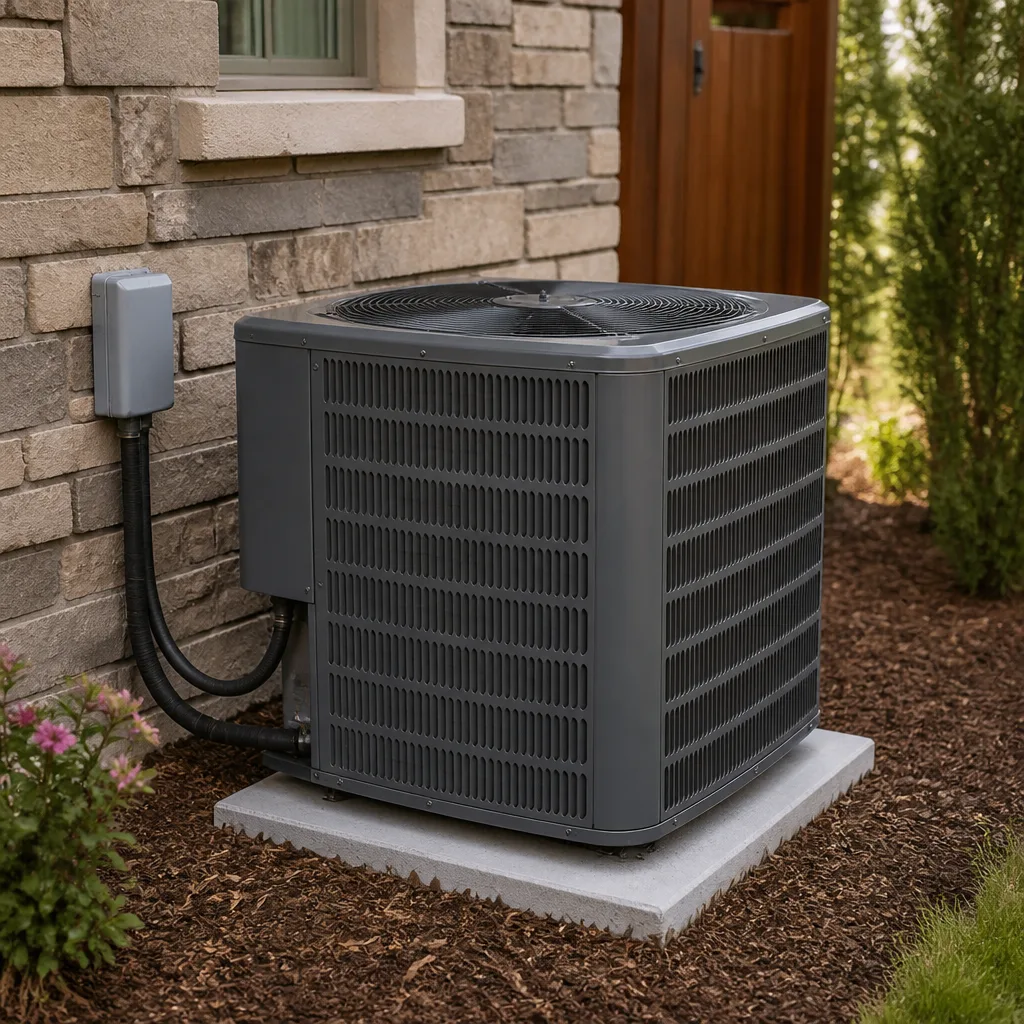 Goodman
Seasonal tune-up and full diagnostic on your Carrier, Trane, or Goodman system - readings shown to you before any repair is proposed
Diagnosis first, numbers second - you approve the repair price before a single part goes in.
Get your free estimateHow to Hire an HVAC Contractor in Whitney: A Step-by-Step Guide
Nevada requires HVAC contractors to hold a C-21 license, but that license doesn’t tell you whether the technician showing up has touched 50 AC systems or 500. The worst moment to evaluate a contractor is during a 108°F breakdown, when the house is baking and you’ll sign anything that promises cold air. Most Whitney homeowners do their vetting in exactly that moment. This guide walks you through a contractor interview framework built to filter out generalist shops that treat air conditioning as one of a dozen trades. You’ll learn what a technically confident answer sounds like, how to read a quote line by line, and what to verify before you sign anything.
Quick Answer
To hire an HVAC contractor in Whitney, verify the contractor holds an active Nevada C-21 license on the state contractor board database, confirm the quote is written with itemized parts and labor, and ask five diagnostic questions that separate a real AC specialist from a generalist. Choose the shop that diagnoses your system before quoting a price, not the one that quotes a price before diagnosing anything.
Styles & brands we work with
- AC installation
- Furnace & heating
- Heat pumps
- Ductless mini splits
- Carrier
- Trane
- Goodman
Table of Contents
- How Do You Verify a Nevada C-21 License Before You Sign?
- What Five Questions Reveal a Real AC Specialist?
- Why Does a Generalist Shop Upsell Instead of Diagnose?
- How Do You Read an AC Repair or Install Quote?
- What Contractor Tactics Should Whitney Homeowners Watch For in Peak Summer?
- Repair or Replace: How Do You Know Which One You Need?
- Does Brand Familiarity Matter When You Hire?
- What Should the Written Contract and Warranty Cover?
How Do You Verify a Nevada C-21 License Before You Sign?
A Nevada C-21 license covers heating, ventilation, and air conditioning, and you can look up any contractor in a couple of minutes. Start on the Nevada State Contractors Board (NSCB) website and use the license search. Type the company’s name, and if it returns several matches, narrow by the license number printed on the company’s paperwork or vehicle lettering. Every legitimate contractor will hand over a license number without hesitation.
Once you’ve pulled the record, active status is only the first thing to check. Go deeper:
- License classification: Confirm C-21 specifically, not a general building or plumbing classification. A C-21 is licensed for the trade you’re actually hiring for.
- Expiration and standing: An active license has a current expiration date and no disciplinary flags. Look at the complaint history, even if the record shows nothing actionable.
- Company name match: The name on the license should match the name on your quote, invoice, and contract. If it doesn’t, ask why.
- Qualifying party: Every licensed Nevada contractor has a listed qualifying party. That’s the individual who carries the trade credentials behind the company. You don’t need to call them, but the field should be populated.
Two minutes on the NSCB database eliminates a large share of the risk in hiring. It won’t tell you how many systems a technician has personally worked on, but it filters out unlicensed operators and expired credentials. In a valley where summer demand pushes people toward quick hires, that step is worth taking before a single dollar changes hands. AC Repair Whitney is happy to walk you through the lookup if you’ve never used it.
What Five Questions Reveal a Real AC Specialist?
Ask these five questions before any contractor quotes you a price. The answers tell you whether you’re dealing with an AC specialist or a shop that happens to list cooling among its services. A confident technician will answer directly. A vague answer or a redirect to “we’ll get someone out to look” is a signal.
- “What’s the refrigerant type and metering device on my system?” A technician who has worked deeply on residential AC systems can identify refrigerant type and metering device from the model plate and describe how each affects performance and repairs. If they can’t answer in plain language, they haven’t spent much time at the equipment.
- “How do you approach a diagnostic on a system that’s running but not cooling?” You want to hear the sequence: check the thermostat and filter first, then look at airflow, then refrigerant charge, then electrical. That’s a systematic approach. If the answer jumps straight to “you probably need a new unit,” you’re talking to a salesperson in a technician’s shirt.
- “What brands do you work on, and which ones do you carry parts sources for?” A shop that specializes in air conditioning typically handles multiple manufacturers, not one. A shop that’s tied to a single brand is incentivized to steer you toward that brand. We work on the brand already in your home, whether that’s a Lennox, Goodman, or Rheem system.
- “Do you perform load calculation before quoting a new installation size?” A correct answer references a load calculation method (Manual J is the common term in the trade) or a similar sizing analysis. Any contractor who matches square footage to a tonnage chart without checking insulation, windows, and ductwork is guessing.
- “Who is the qualifying party on your license, and where can I verify it?” Expect an immediate answer with the license number and a pointer to the NSCB lookup. A contractor without a license, or who is cagey about the number, should not be on your property.
Write the answers down. If two contractors give you very different answers to the same question, you’ve found your filter. Specificity is the tell. A specialist can name parts, components, and check sequences without looking anything up. A generalist will fill the gap with reassurance.
Why Does a Generalist Shop Upsell Instead of Diagnose?
A contractor who also does plumbing, roofing, or electrical has little reason to spend an hour tracking down a failing capacitor if a full system replacement is more profitable. That’s structural, not personal. When air conditioning is one line among a dozen, the AC call gets triaged like any other, and the easiest path to a ticket is a replacement quote. It also means the technician dispatched to your house on a 110°F afternoon may be a plumber learning on the job.
A dedicated AC shop operates differently. There is no plumbing division to feed, no roofing jobs to bundle. Diagnosis becomes the goal, because diagnosing, repairing, and then maintaining the same system is the business model. That shows up in how calls get handled:
- The technician arrives with equipment to test refrigerant pressures and electrical components, not just a sales binder.
- The recommendation starts with what failed and why, not with a replacement estimate.
- When a repair is the right call, the quote is short and specific. When replacement is the right call, the quote explains why and offers a range of options.
- There’s no pressure toward a particular manufacturer because the shop isn’t tied to one.
We are an AC-only specialist. That focus is deliberate: repair, replace, and maintain, and nothing else. It’s a simple test you can apply to any contractor in Whitney. Ask how many trades they handle. If the answer includes anything besides air conditioning, expect the upsell.
How Do You Read an AC Repair or Install Quote?
Every legitimate AC estimate in Whitney, NV, should be in writing and broken into line items you can read out loud. A quote with one total number and no detail is a red flag, whether the job is a $600 repair or a $9,000 installation. Here’s what belongs on the page:
On a repair estimate:
- Diagnosis or symptom description: What was actually found wrong, in plain language. “Failing run capacitor on the condenser” is specific. “Needs service” is not.
- Parts: Itemized parts with the type or model. A capacitor is not a capacitor is not a capacitor; ask for the spec.
- Labor: Separated from parts, even if it’s a flat rate for the job.
- Warranty: The warranty period on the part and on the labor, stated separately. Many manufacturers warrant the part; the labor coverage is set by the contractor.
- Conditional language: If the diagnosis could change once the technician gets inside the system, that should be stated up front, not added later.
On an installation estimate:
- Equipment model and size: Full model number and tonnage. Not “a 3-ton unit” alone. You should be able to look up the exact unit.
- Load calculation basis: Something on the page that shows the size was derived, not guessed.
- Ductwork and line-set scope: What gets replaced, what gets reused, and any allowances for duct modification if the new unit’s airflow differs.
- Permits: Most local jurisdictions require a permit for a system replacement. Confirm in writing who pulls it and that the cost is in the total.
- Electrical and disconnect scope: Whether the disconnect box, whip, and breaker are being replaced, reused, or upgraded.
- Startup and commissioning: What happens on the first run after install, including refrigerant charge verification.
- Warranty terms: Manufacturer warranty and labor warranty spelled out, with registration responsibility noted.
If a quote leaves any of those out, ask for it in writing before you sign. For the full scope of what a replacement includes, see AC installation.
What Contractor Tactics Should Whitney Homeowners Watch For in Peak Summer?
Peak summer in the Las Vegas Valley is when HVAC calls spike and bad operators know it. The tactics below are the ones we hear about most in Whitney. None of them are exotic; they’re all variations on using a stressed homeowner’s urgency against them.
- The scare quote: A technician walks in and announces the compressor is dead before running any diagnostic, then hands over a replacement estimate. A dead compressor needs to be confirmed with actual readings, not a glance at the unit. Ask what the pressures and electrical readings were.
- The refrigerant top-off trap: A system low on refrigerant need not be “topped off” repeatedly; it has a leak. Charging without finding the leak won’t get you through the summer. Ask for leak detection before you pay for refrigerant.
- The unlisted permit: An installer who says permits aren’t needed for a like-for-like swap is skipping a step. Ask your city or county building department about the requirement, and get the permit responsibility written into the quote.
- The “today only” installation discount: Any contractor who needs an answer on the spot is using time pressure in place of explanation. A real load-calculation-based install quote takes time to prepare, and a legitimate contractor expects the homeowner to sleep on it.
- The upsell to a brand: A shop tied to one manufacturer (say, exclusively Lennox or exclusively York) will naturally favor that brand in every conversation. Ask if the recommendation would change if the homeowner brought up a different make.
- The van with no license number: Nevada contractors are required to display their license number. If the van lacks one and the paperwork doesn’t have it either, stop.
None of this is unique to any one neighborhood, but the concentration of work in Whitney and the surrounding valley during peak heat makes the tactics easier to run. Know the playbook and the tactic loses its edge.
Repair or Replace: How Do You Know Which One You Need?
There’s no universal age cutoff, but there are signals that change the math. A system that fails once and is otherwise healthy usually deserves a repair. A system that has been addressed repeatedly and is approaching the end of its expected service life is a candidate for replacement, especially if the repairs are adding up. The decision should be driven by what the technician actually finds, not the calendar alone.
Here’s a practical framework:
- Count the repairs. If a system has needed three or more major repairs in a single cooling season, replacement starts to compete on cost. Ask for the running repair total and the replacement estimate side by side.
- Look at the failure type. A failed capacitor, contactor, or blower motor is a straightforward repair. A failed compressor or a leaking evaporator coil is a bigger decision, especially if the refrigerant in the system is one that’s being phased down nationally.
- Check efficiency and refrigerant type. Older systems running high-global-warming-potential refrigerant face rising future costs and eventual supply limits. If the repair puts you back into an aging system with expensive-to-service refrigerant, weigh that against the new-system cost over the next several years.
- Account for the ductwork. A new outdoor unit alone won’t fix a ducted system that’s leaking 20 percent of its air. If the ducts are compromised, address that as part of the decision.
- Get both options in writing. Any honest contractor will price the repair and the replacement on the same visit without forcing a decision.
For the repair side of that decision, the team at AC repair is happy to walk you through the tradeoffs without a hard sell.
Does Brand Familiarity Matter When You Hire?
Yes, but not in the way most homeowners assume. It isn’t about loyalty to a manufacturer. It’s about whether the technician walking into your house has worked on the equipment already there. Every major residential brand has its quirks: control boards that fail a certain way, service valves positioned differently, error codes that point to specific components. A technician who has seen those quirks across a hundred systems diagnoses faster than one who is reading the manual for the first time at your home.
We’re factory-familiar with nine leading AC brands: Carrier, Trane, Lennox, Goodman, Rheem, York, Daikin, Bryant, and American Standard. That range matters because homeowners inherit whatever system was installed by the previous owner. Nobody in Whitney should have to hunt for a specialty shop because their home happens to have a Goodman instead of a Carrier. We work on the brand already in your home, and that includes not steering you toward a different brand to make the job easier.
What to ask the next contractor you interview:
- “What brands do you work on most often?” If the list is one, ask why.
- “Is there a brand you recommend for a new install, and is that because of margin or because of fit for my house?” Expect a reason tied to the home, not the manufacturer’s sales incentive.
- “Do you carry parts for my model, or is there a special order?” Special-order is fine; being told it doesn’t matter is not.
Brand-agnostic repair is what you want. A shop that recommends a particular system because it fits your home is a specialist. A shop that recommends a particular system because that’s the one they push is a reseller.
What Should the Written Contract and Warranty Cover?
Every HVAC job in Whitney, NV should end with a written contract that spells out scope, price, and warranty terms in plain language. The quote is not the contract; the contract is what protects you if something goes sideways after the install or the repair. Before you sign, make sure the following are on the page:
- Full scope of work: Every task included, matching the line items from the quote. Nothing implied, nothing “we’ll handle that on the day.”
- Fixed price: The number that will appear on the invoice, with a note that material price changes don’t retroactively change the total unless scope changes on your approval.
- Warranty terms: Manufacturer warranty period for parts, separate labor warranty period, and who handles registration. Ask what happens if the unit fails in month 14 versus month 14 after install.
- Permit responsibility: Who pulls it, who pays for it, who schedules the inspection.
- Payment schedule: What’s due before work, what’s due at completion, and the method. Be cautious about large deposits before any equipment is on site.
- Right to cancel: Nevada offers a cancellation window for certain home improvement contracts. Ask explicitly what your cancellation rights are, and read the fine print.
- Change-order process: How additional work is approved if the technician finds something unexpected. It should require your signature, not a verbal yes.
If your contract says any of these are “handled separately” or “covered under warranty” without details, ask for the specifics in writing. A specialist contractor will produce them without hesitation. Our technicians have up to 8 years of experience and customers can rely on one company from the install through every maintenance visit and repair call, so the paperwork is worth getting right the first time. You can find more local context on the Whitney page.
Common Mistakes to Avoid
- Hiring the first van that arrives. Whitney’s summer heat pushes homeowners to make quick calls, but hiring the first available contractor without verifying the C-21 license invites problems later. Two minutes on the NSCB database eliminates most of them.
- Accepting a verbal quote. A price that only exists in conversation is not a price. Insist on a written, itemized estimate and compare it to a second one before deciding.
- Skipping the load calculation on a new install. A new system sized by square footage alone will either run constantly or short-cycle, and neither lets you get the efficiency you paid for. Ask to see the sizing basis in the estimate.
- Choosing the cheapest quote as the deciding factor. The lowest number is often the lowest scope: no permit, no duct attention, no warranty in writing. Compare scope before comparing totals.
- Letting refrigerant top-offs replace leak diagnosis. If the system is low on refrigerant, it has a leak. Repeated charging without finding the leak drains money and never solves the problem.
- Ignoring the ductwork. A high-efficiency unit connected to leaky ducts will not deliver rated performance. Any contractor who brushes off duct inspection on an install should be asked why.
- Not asking for the brand recommendation reasoning. If a contractor pushes one manufacturer without a clear reason tied to your home, you may be looking at a brand-locked shop rather than a fit-based recommendation.
See the difference
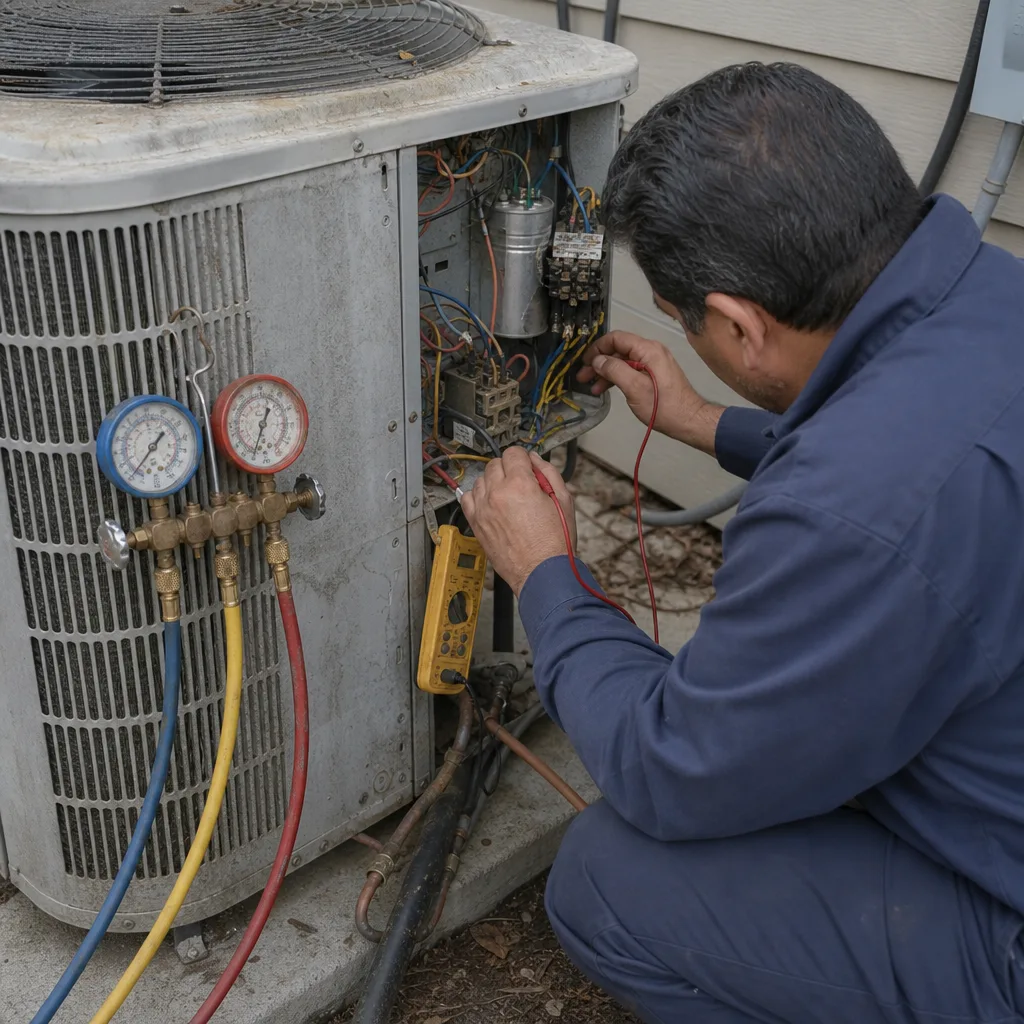 Before
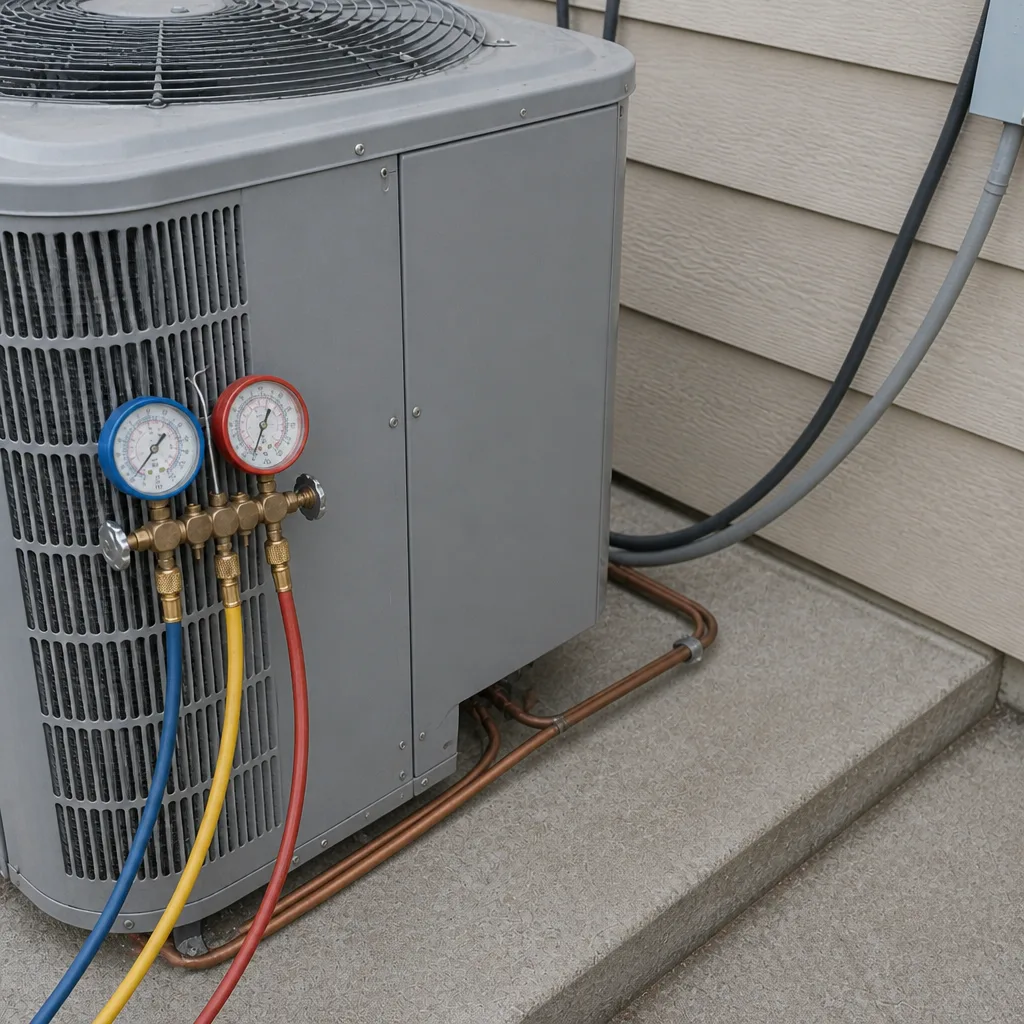 After
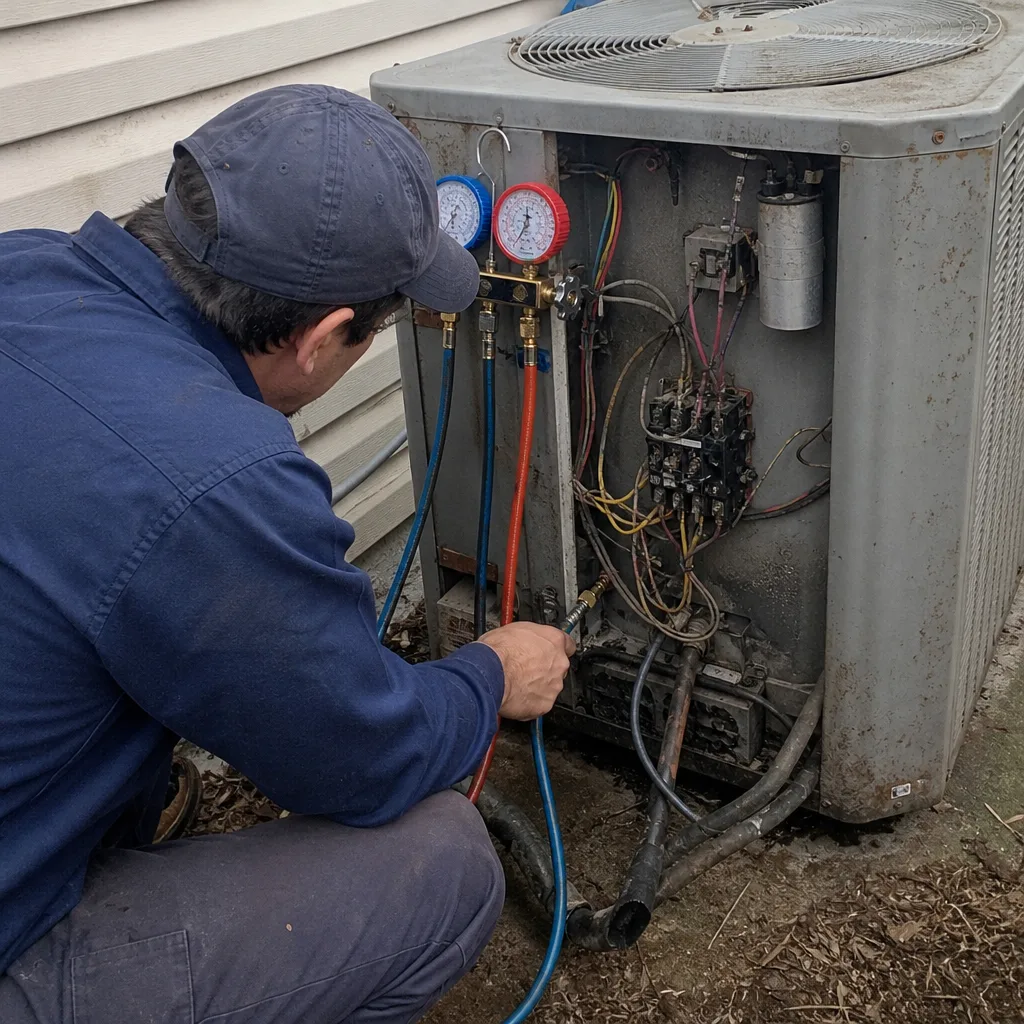 Before
 After
 Before
 After
When to Call a Professional
Some AC problems are worth handling yourself: a clogged filter, a tripped breaker, a thermostat set to the wrong mode. Most are not. Call a professional when the system is running but not cooling, when the outdoor unit won’t start, when you see ice on the indoor coil or refrigerant lines, when the breaker trips repeatedly, or when the unit is making noises it didn’t make last summer. Those symptoms point to refrigerant, electrical, or mechanical problems that only get more expensive with delay. And if the system goes out during a heat wave in Whitney, don’t wait for “cooler weather to take a look.” AC Repair Whitney offers free estimates in Whitney. Call (888) 691-6715. We answer 24/7. Fast dispatch from 7am to 7pm, Sunday through Friday.
Frequently Asked Questions
Yes. Nevada requires HVAC contractors to hold a C-21 license, and you can verify any contractor’s license on the Nevada State Contractors Board database in under two minutes. Beyond active status, check the classification, expiration, complaint history, and that the license name matches your paperwork. Hiring an unlicensed contractor removes the state’s leverage if something goes wrong.
We don’t quote diagnostic pricing here because the estimate is free and the price for the actual work is set per job by the written estimate. What you should expect from any contractor is a written estimate after the diagnosis that itemizes parts, labor, and warranty. If a contractor can’t produce that on request, ask why before you hand over payment.
An AC specialist prioritizes air conditioning as the core business, which means faster diagnosis and fewer brand-locked recommendations. A generalist handles AC as one of many trades, which structurally favors replacing a system over diagnosing it, because the replacement is more profitable and feeds other divisions. Ask any contractor how many trades they handle; the answer tells you what to expect.
A fair quote for new AC in Whitney will name the equipment model and tonnage, reference a load calculation basis, spell out duct and line-set scope, include the permit cost, and list manufacturer and labor warranties separately. A quote that leaves any of those out should be sent back for completion before you sign. Compare two written quotes side by side on scope, not just on total.
We service nine leading AC brands and can install any of them, so we don’t steer customers toward one manufacturer. The right brand depends on the home’s cooling load, duct capacity, and budget. We work on the brand already in your home if you’re repairing, and pick a system fit for the house if you’re replacing. Call (888) 691-6715 for a free estimate; we answer 24/7 with fast dispatch from 7am to 7pm, Sunday through Friday.
Once a year before peak heat is the baseline for most Whitney homes; a second visit mid-season helps in a hot summer. Maintenance catches weak capacitors, low refrigerant charge, and dirty coils before they fail on a 110°F afternoon. Skipping maintenance rarely saves money; it usually just moves the expense to the worst day. The team at AC Repair Whitney can outline a maintenance schedule that fits your system’s age and usage.
The Bottom Line
The right contractor for a Whitney home is one you can interview before the heat arrives, not one you call after the system quits. Verify the Nevada C-21 license on the NSCB database, ask the five diagnostic questions, read the quote line by line for parts, labor, warranty, and permit scope, and treat any push toward a specific brand as a signal of what’s driving the recommendation. Choose the specialist who diagnoses before quoting over the generalist who quotes before diagnosing. Repair, replace, or maintain: one call covers it, and starting that relationship in the calm months is a lot easier than starting it at 108°F.
If you’re ready to talk through your system, call (888) 691-6715 for a free estimate. We answer 24/7. Fast dispatch from 7am to 7pm, Sunday through Friday. AC is all we do.
Written by the team at AC Repair Whitney.