
Last updated November 17, 2026
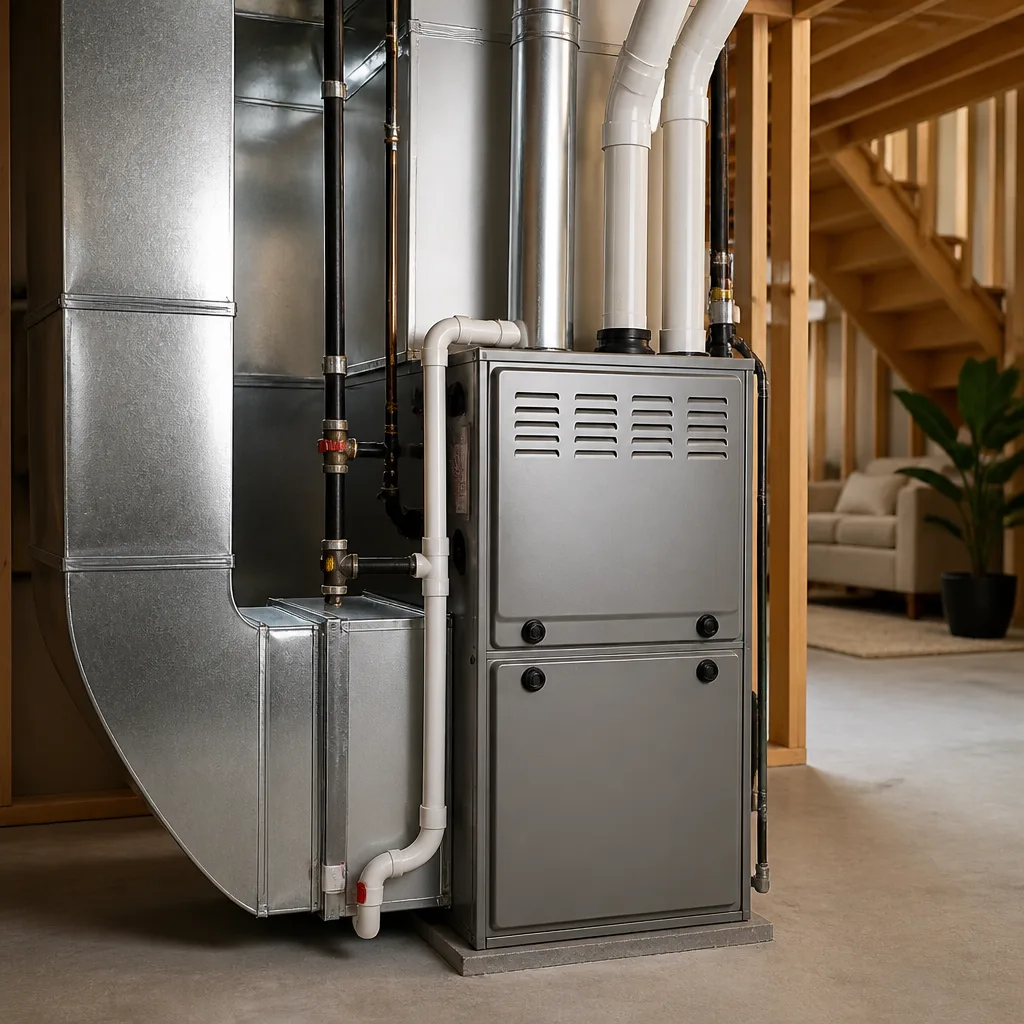 Furnace & heating
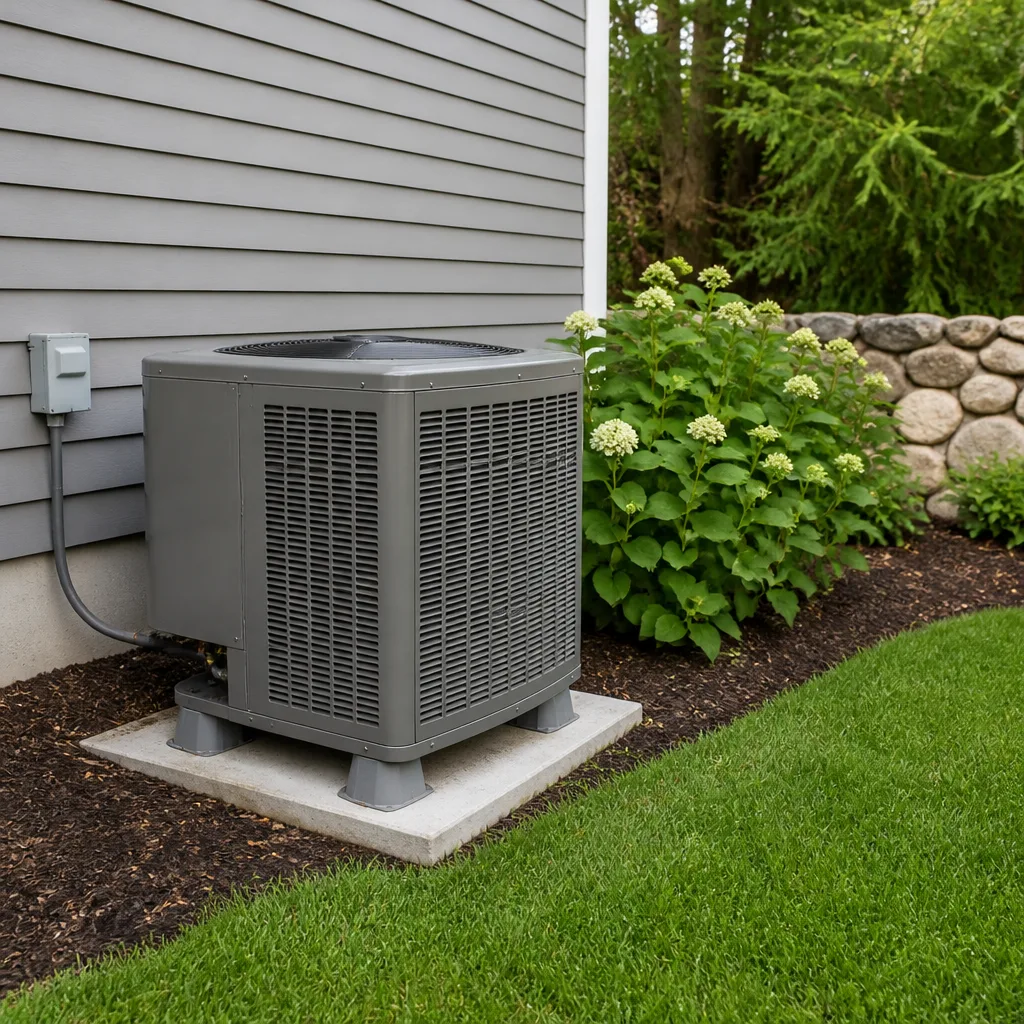 Heat pumps
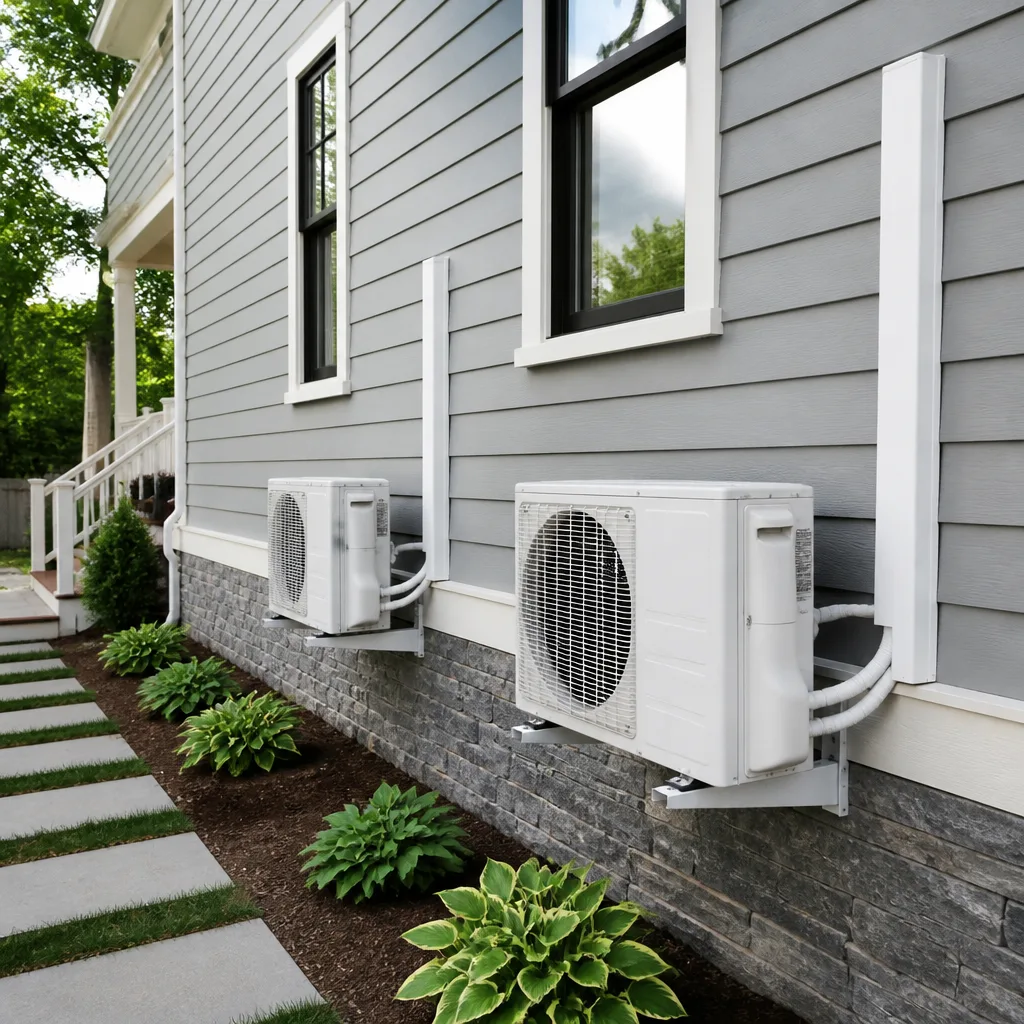 Ductless mini splits
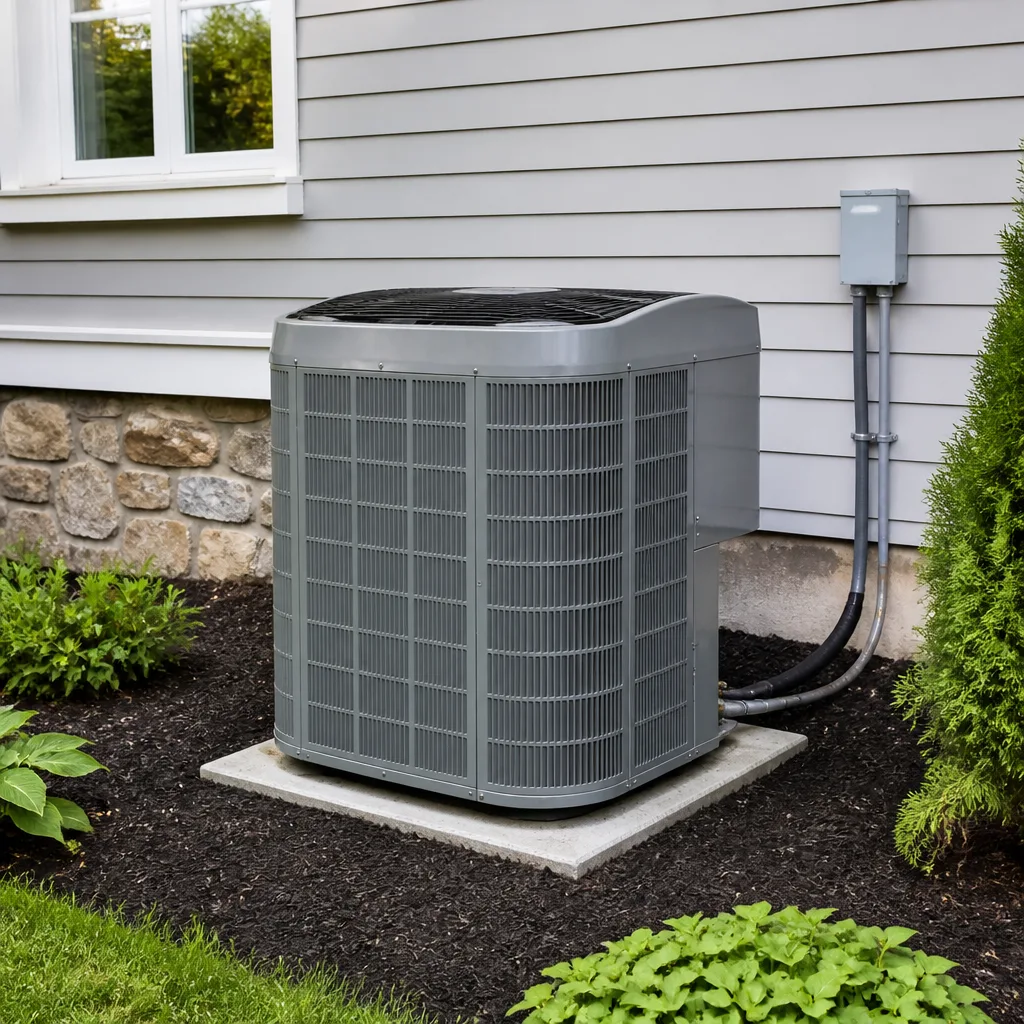 Carrier
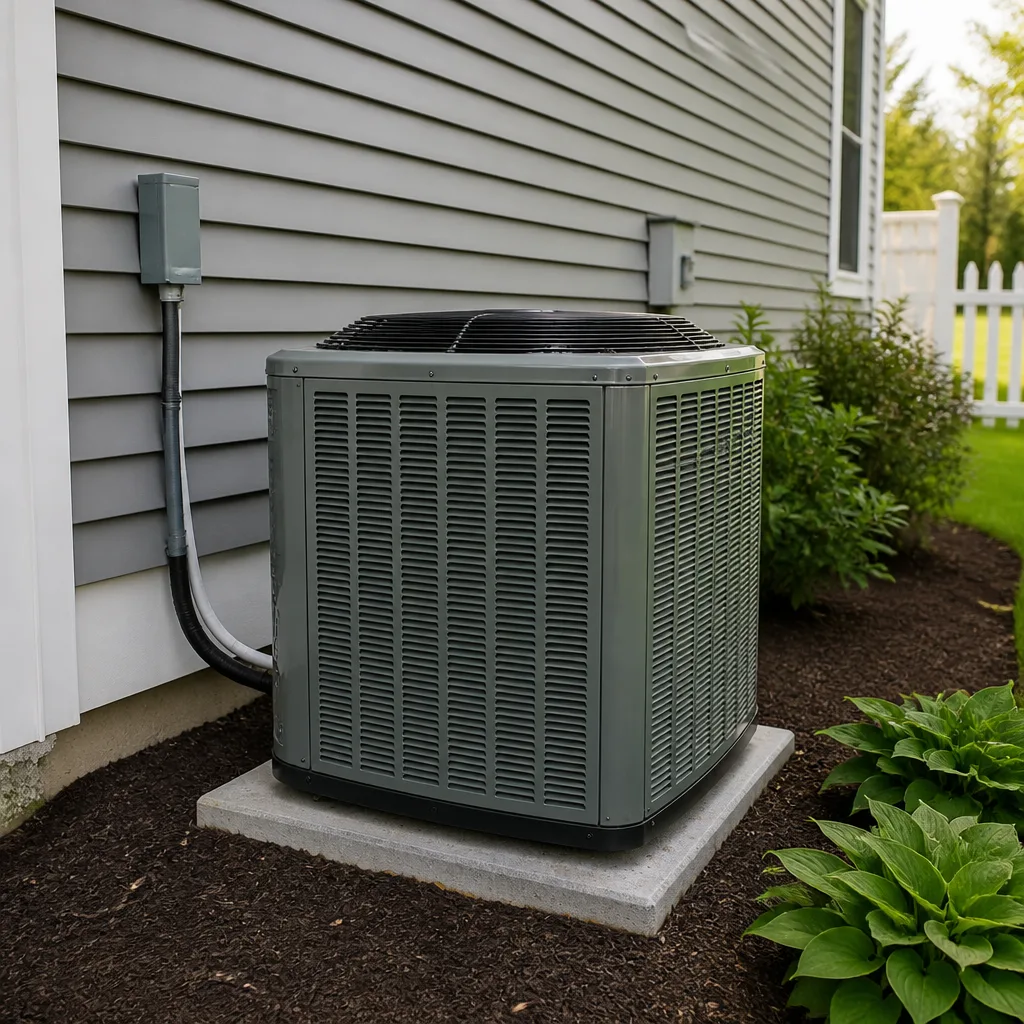 Trane
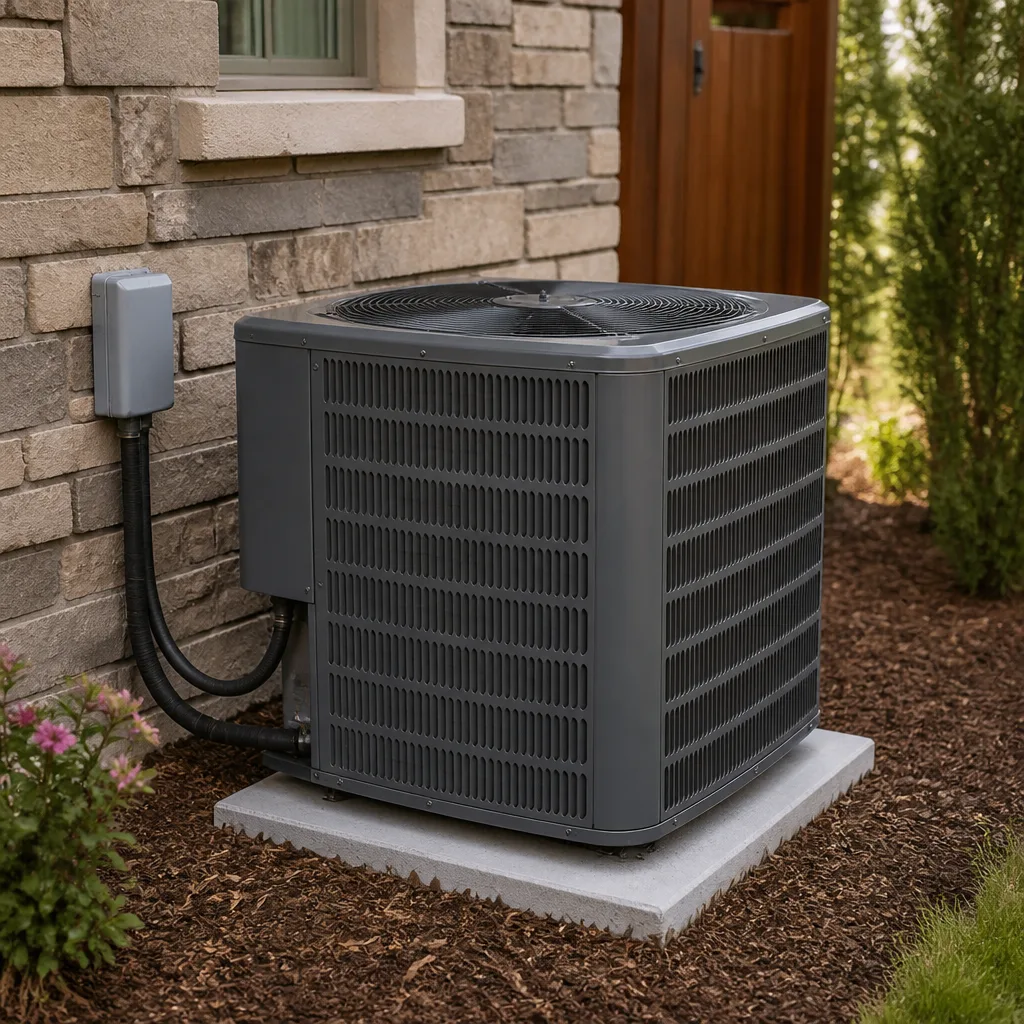 Goodman
Seasonal tune-up and full diagnostic on your Carrier, Trane, or Goodman system - readings shown to you before any repair is proposed
Diagnosis first, numbers second - you approve the repair price before a single part goes in.
Get your free estimateHVAC Warning Signs: A Whitney Homeowner’s Reference Guide
A compressor doesn’t fail overnight. It announces itself for weeks through rising amp draw, longer run times, and supply air that slowly loses its chill. The problem is that most homeowners only notice the final day, the one where the house stops cooling at 3pm on a 108°F afternoon. By then the cheap fix is gone and you’re pricing a replacement you didn’t plan for. This guide is about the signals that show up two to six weeks before that day, and how to read them. We work on air conditioning in Whitney, and these are the patterns we actually check.
Quick Answer
Warning signs of an AC breakdown in Whitney are short cycling, run times that stretch past 20 continuous minutes, a shrinking temperature split between supply and return air, breaker trips on the condenser circuit, warm spots that appear before the thermostat hits its setpoint, and unusual clicking or humming at the outdoor unit. Each of these usually appears two to six weeks before a failure, which is the window where repair is inexpensive.
Styles & brands we work with
- AC installation
- Furnace & heating
- Heat pumps
- Ductless mini splits
- Carrier
- Trane
- Goodman
Table of Contents
- The Temperature Split: The Single Best Warning Sign
- Long Cycling vs. Short Cycling: Two Different Failure Modes
- Electrical Signs You Can Observe Safely
- Using a $15 Infrared Thermometer to Catch Coil and Refrigerant Problems
- Warning Signs During 105°F+ Days in Whitney
- Airflow and Duct Signals Most Homeowners Miss
- Brand-Specific Quirks: York, Daikin, and American Standard
- What Happens When You Call
The Temperature Split: The Single Best Warning Sign
The temperature split, or delta-T, is the difference between the air going into your return grille and the air coming out of a supply vent near the unit. A healthy system running on a hot day produces a split somewhere in the high teens to low twenties in Fahrenheit. If that split is shrinking week over week, something in the loop is failing, and you have real warning time to fix it before the compressor gives out.
Why the split is a better early signal than “it feels warm” is simple. The split narrows slowly. A system that’s half a pound low on charge, or has a coil that’s picked up a film of dust, might still pull the house to 78°F at night. But at 4pm on a 106°F day the split has gone from 20 to 12, and the system simply can’t remove enough heat to keep up. The thermostat creeps. Then one afternoon it stops keeping up at all.
How to track it in under five minutes:
- Buy an inexpensive infrared thermometer or a cheap digital probe thermometer.
- Pick one supply vent in a central room and one return grille. Don’t move them each check.
- Measure both after the unit has run continuously for at least 15 minutes.
- Subtract supply from return. Write the number and the outdoor temperature in a note on your phone.
- Repeat the same check mid-afternoon, twice a month. You’re watching the trend, not one reading.
A split that drops two or three degrees over a few weeks in Whitney’s summer heat is a coil or charge problem forming. That’s a repair conversation, not a replacement one, if you catch it now.
Long Cycling vs. Short Cycling: Two Different Failure Modes
Homeowners use “short cycling” for everything. Technically, the two behaviors mean opposite problems, and confusing them sends you down the wrong repair path.
Short cycling: the system starts and stops every few minutes
A unit that starts, runs for three to five minutes, and shuts off before the house is cooled is short cycling. The most common causes are a system that’s oversized for the load, a refrigerant charge that’s too high and tripping the high-pressure switch, or a frozen coil that’s choking airflow. Short cycling is hard on the compressor because every start pulls a surge of current. It’s the pattern that shortens equipment life fastest.
Long cycling: the system runs past 20 minutes and still can’t cool
A unit that runs 25, 40, even 50 minutes straight trying to hit the setpoint and never quite gets there is long cycling. That points to lost capacity, not an oversized system. Low refrigerant charge, a dirty condenser coil, a failing capacitor that’s slowing the compressor, or duct leakage into a hot attic can all cause it. Long cycling at Whitney’s afternoon temperatures usually means capacity is already gone, and the unit is running flat-out just to hold the house at 80°F.
If either pattern shows up, isolate it before it escalates. Long cycling in high heat is a capacity problem and gets worse every day. Short cycling is a pressure problem and can trip a breaker at 2am. In our experience, the distinction saves homeowners from buying a system when they needed a capacitor, and from nursing a dying compressor for weeks past the point where a fix was cheap.
Electrical Signs You Can Observe Safely
Electrical checks at the condenser are a trained technician’s job. The disconnect box, the panel, and the contactor carry live current, and we don’t recommend opening any of them yourself. But you can observe several signals from outside the equipment, and those observations are genuinely useful.
- Breaker trips more than once. The AC circuit tripping repeatedly is one of the earliest signs of a failing compressor, a short, or a capacitor pulling abnormal current. Stop resetting it. Repeated resets risk damage to the compressor and create a fire risk.
- Warm air at the disconnect. Stand a few feet from the little grey disconnect box and hold your hand near, not touching, the side. If the box feels noticeably warm or you hear rapid buzzing inside, call us. That’s not normal.
- Unusual amp cycling sounds. A healthy compressor has a steady hum with a rhythmic top end. A compressor drawing high amps often sounds like it’s stuttering, dropping, coming back, dropping. That stutter is the compressor fighting itself, and it’s a leading indicator of failure.
- Buzzing at the outdoor unit after shutdown. A contactor that stays closed, or a fan motor that keeps straining, both leak current and both are repairable.
- Lights dim briefly when the AC starts. Occasional dimming is common. Dimming that’s getting more noticeable than it was last summer is worth a call, especially in older Whitney neighborhoods where panels weren’t sized for today’s equipment.
One rule of thumb: anything inside a disconnect box or electrical panel is off-limits for a homeowner. Watching from outside is safe. Opening a panel is not. If you see something, call (888) 691-6715 and describe what you observed.
Using a $15 Infrared Thermometer to Catch Coil and Refrigerant Problems
An infrared thermometer costs less than lunch and does more early detection than any gadget in the average homeowner’s toolbox. Point it at the right spots and it will show you trouble weeks before the thermostat tells you anything.
Where to point it
- Sweep the face of the outdoor condenser coil. A clean coil runs uniform. A dirty or partially blocked coil will read very hot on one side and cooler on the other.
- Measure the larger insulated suction line where it enters the house. That line should feel cool to the touch and read a consistent temperature along its length.
- Measure the smaller liquid line beside it. It’s normally warm, not hot.
- Compare the reading on the suction line to the reading at the supply vent. A cold suction line with a warm supply vent is a sign refrigerant is moving but coil airflow is choked, or the coil itself is coated.
- Note any reading where the suction line is cold and frosted or the liquid line is very hot. Both point to refrigerant or airflow issues.
What the readings tell you
A dirty condenser coil raises head pressure, which drives amp draw up and capacity down. That’s the single most common early failure in Whitney because systems here fight dust and heat together. A refrigerant leak shows up as a suction line that runs warmer than it used to, and a supply temperature that’s drifted up a few degrees. An iced-over suction line is a problem now, not next week.
What you can’t do with this tool is fix anything. Refrigerant handling requires licensing and specialized gauges. Coil cleaning from inside the cabinet can bend fins and void warranty. Use the thermometer as an early warning device. Call us to diagnose the actual cause. We work on the brand already in your home, whether it’s a York, a Daikin, or anything else on the nine brands we service.
Warning Signs During 105°F+ Days in Whitney
Whitney sits in the Las Vegas Valley in Clark County, and peak summer afternoons regularly push past 105°F. High heat creates a specific set of warning signs that don’t show up at 90°F. If you see these, the system is already failing, and the window to repair without a full breakdown closes fast.
High-pressure trips
When the compressor’s high-pressure switch shuts the unit off on its own during the hottest part of the day, the system is running past its design limits. Possible causes: a partially blocked condenser coil, a refrigerant charge that’s too high, or not enough airflow through the outdoor unit. The unit will reset itself when it cools. That looks like the system is fine again. It isn’t. Each trip is the compressor being asked to start under load, and the trips get more frequent.
Reduced airflow at peak
If vents that felt strong at 8am feel weak at 4pm, the system may be running a blower on a failing capacitor or your ductwork is losing pressure to an attic that’s over 130°F. Blower motors slow as they fail. A slightly slow blower in moderate heat hurts efficiency. In extreme heat it loses the coil and produces a warm house within hours.
Warm spots
Every home in Whitney has a room that tends to run warmer, often a west-facing bedroom. If that room was always a little warmer and now it’s the room you can’t go in after 3pm, the system is losing capacity. Same-level warm spots are the signature of a failing system that hasn’t failed yet.
Airflow and Duct Signals Most Homeowners Miss
Most of what goes wrong with an AC system is really an airflow story. The compressor and the refrigerant loop get the attention, but if air isn’t moving through the coil and through your house the way it should, capacity drops even on a perfectly charged system.
- Whooshing vs. hissing. A healthy return grille has a soft, even whoosh. Sharp hissing or whistling means air is restricted, often by a filter that’s loaded past its limit or a supply that’s partly closed.
- Filter life shrinking. If your filter used to last three months and now needs changing in three weeks, dust is loading faster. That’s often leaky return ducting pulling air from a dusty attic.
- Vent temperature differences. Compare two supply vents on the same branch. A difference of more than a few degrees points to a duct problem between them.
- Warm air at one vent while others are cold. That vent is either disconnected from its run or dealing with a crushed flex duct. Both are fixable, and both cost efficiency every day they go unfixed.
- Dust blowing from a vent. A puff of dust on startup is normal. Continuous dust from one vent means the duct connection is loose.
Your AC maintenance visit is where this gets sorted. A thorough maintenance inspection checks static pressure, filter condition, coil condition, and vent temperatures. If you don’t have a maintenance routine, that’s the highest-value habit you can add before next summer. Think of maintenance as the thing that extends system life and cuts emergency repair frequency. You catch the airflow slide before it becomes a compressor.
Brand-Specific Quirks: York, Daikin, and American Standard
Every manufacturer builds equipment with its own design priorities, and those priorities change how a warning sign shows up. A capacitor failure on a York doesn’t always announce itself the same way it does on a Bryant. Knowing the brand in your home shortens diagnosis and lets us pull the right history.
York equipment, common in the tract homes around Whitney, tends to run quietly and gives few audible warnings before a capacitor goes. The early signs are mostly measurable: higher amp draw and a longer start. Daikin systems, particularly the inverter-driven models, show up as a blower that slowly loses speed and a split that drifts rather than crashes. American Standard and Trane, which share engineering, tend to fail a contactor or a pressure switch cleanly with a visible click, while their compressors are forgiving of dust for a longer stretch. Bryant units often show early short cycling on an oversized system, which is a load-calculation issue as much as an equipment one.
What matters for a homeowner is this: no single brand fails in one way, and no single brand fails early for everyone. A brand-agnostic repair specialist looks at the actual readings, not the badge on the cabinet. If the answer is a repair, you get a repair. If the answer is that your 14-year-old unit is going to keep costing you every summer, you get a straight recommendation to replace, not an upsell. That’s the difference between a specialist and a shop that pushes one manufacturer.
What Happens When You Call
You can have the same warning signs for weeks and still be caught without a plan when the thermostat finally loses the fight. The way to avoid that is a phone call the moment a pattern shows up, not a scramble after the breakdown.
When you call AC Repair Whitney, the phone is answered by a person. We ask what you observed: which warning sign, when it started, what the outdoor temperature was. Then we send a technician with fast dispatch from 7am to 7pm, Sunday through Friday, and we do same-day service when the schedule allows. The technician runs the diagnostics the field testers are built for: amperage on the compressor, superheat and subcooling on the refrigerant circuit, static pressure on the ductwork. You get a full picture of what’s failing and how long the system has.
You don’t get a software-generated quote. You get an honest recommendation: repair, replace, or maintain, matched to what your system actually is. Our technicians have up to 8 years of experience across the brands we service, and every one of them is trained to explain the findings in plain English. Estimates are free, and the price is set per job by the written estimate, so nothing on the bill comes as a surprise.
Common Mistakes to Avoid
- Resetting a tripped breaker more than once. One reset after a power surge is fine. Repeated trips are a warning, not an inconvenience. Every reset is a surge of current through a compressor that’s telling you it’s struggling, and a second trip is the point to call.
- Running the system with the outdoor unit surrounded by clutter. Whitney homes often have the condenser boxed in by block walls or storage. That traps hot air against the coil and pushes head pressure up on the hottest days. Three feet of clear space on all sides makes a real difference.
- Chasing the setpoint lower during a heat wave. Setting the thermostat to 68°F on a 108°F day doesn’t cool the house faster. It just ensures the system runs non-stop and never shuts off, which hides short cycling and makes an overworked compressor work harder.
- Judging the system by the thermostat reading alone. The thermostat reads the air at one spot. The temperature split and the supply vent temperatures tell you what’s actually happening in the loop. That’s where the early signal lives.
- Ignoring a dust film on the condenser fins. Dust here is relentless, and a coat of it costs capacity before it ever costs a part. A rinse during a maintenance visit is the cheapest efficiency gain you can buy.
- Assuming a warm room is a duct problem. Usually it’s capacity. A warm west-facing bedroom in Whitney in August is often the first place the house tells you the system is losing ground. Don’t spend money on duct fixes until the split is measured.
- Waiting for the failure to call. A failing compressor diagnosed at the first warning sign is usually a repair. The same compressor diagnosed after it’s been cycling on high pressure for three weeks is usually a replacement. The difference is weeks, not months.
See the difference
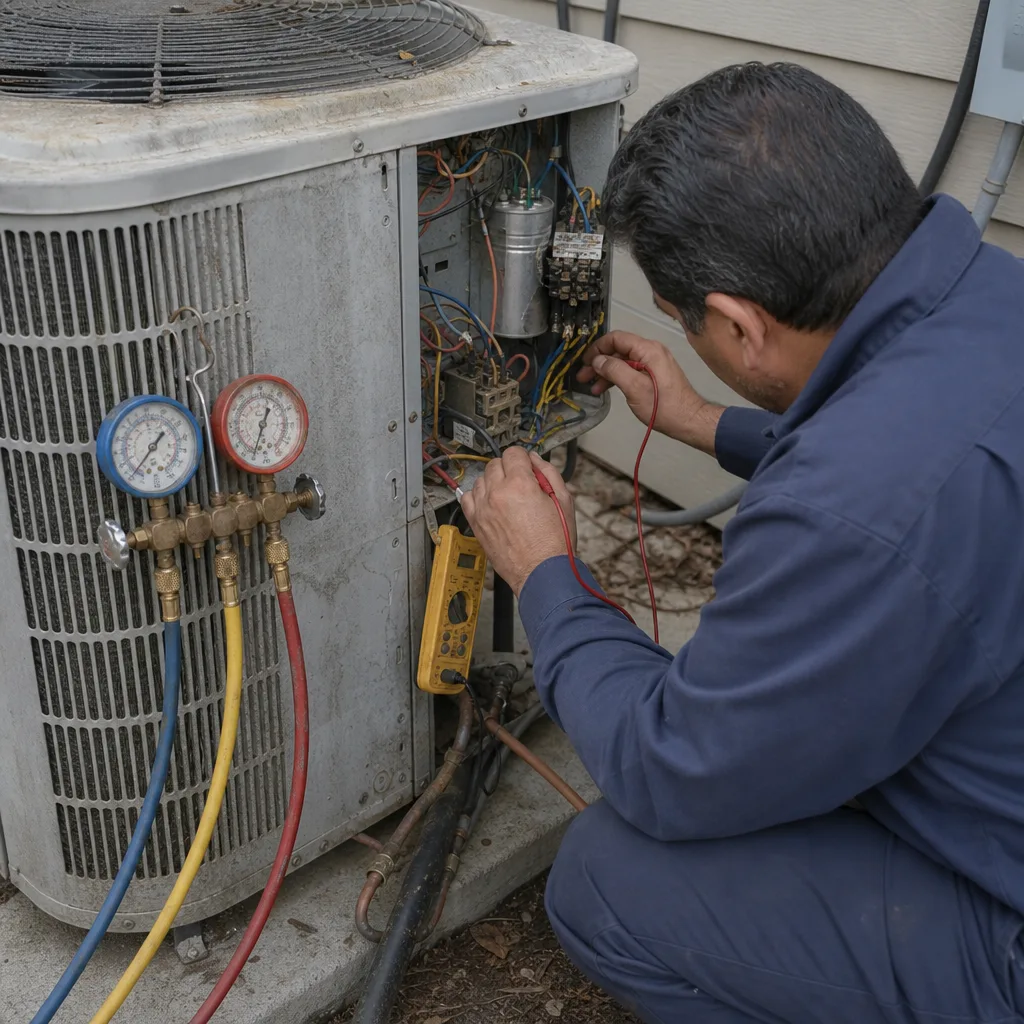 Before
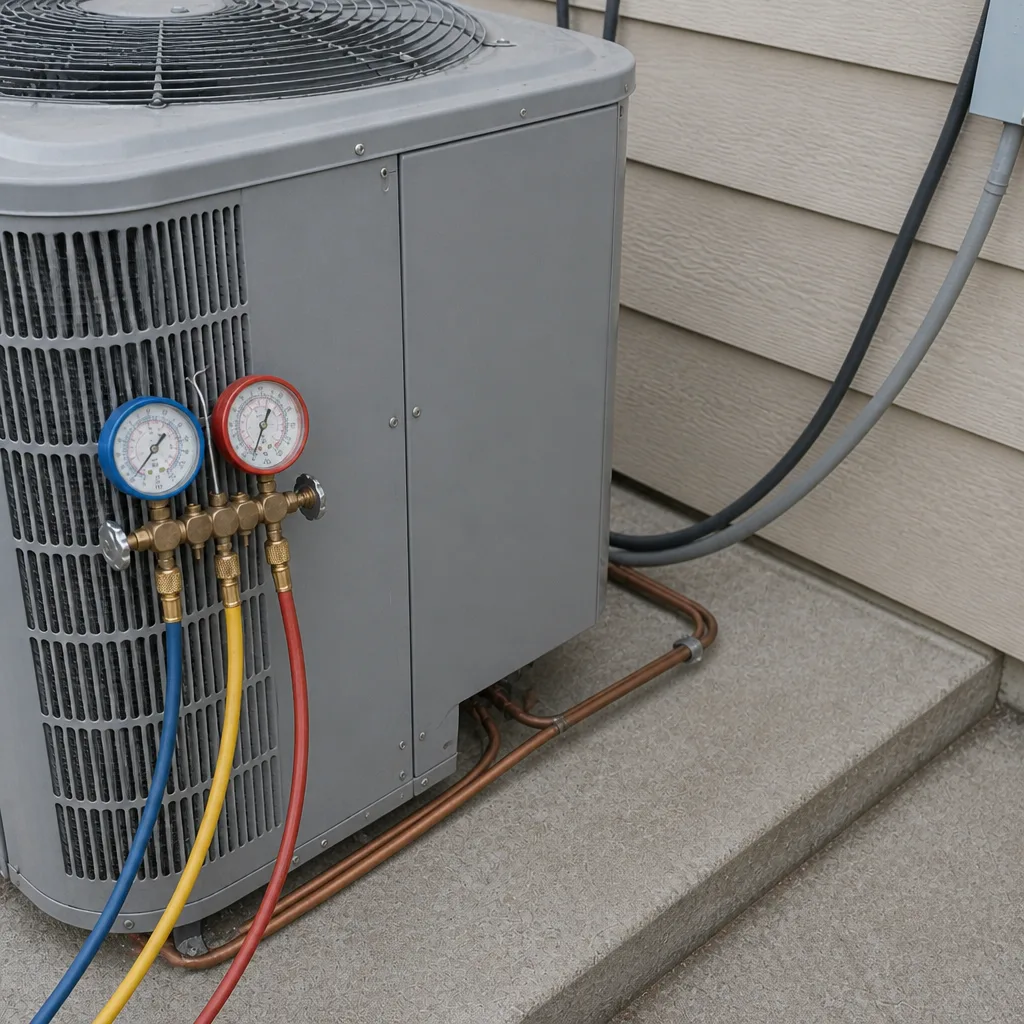 After
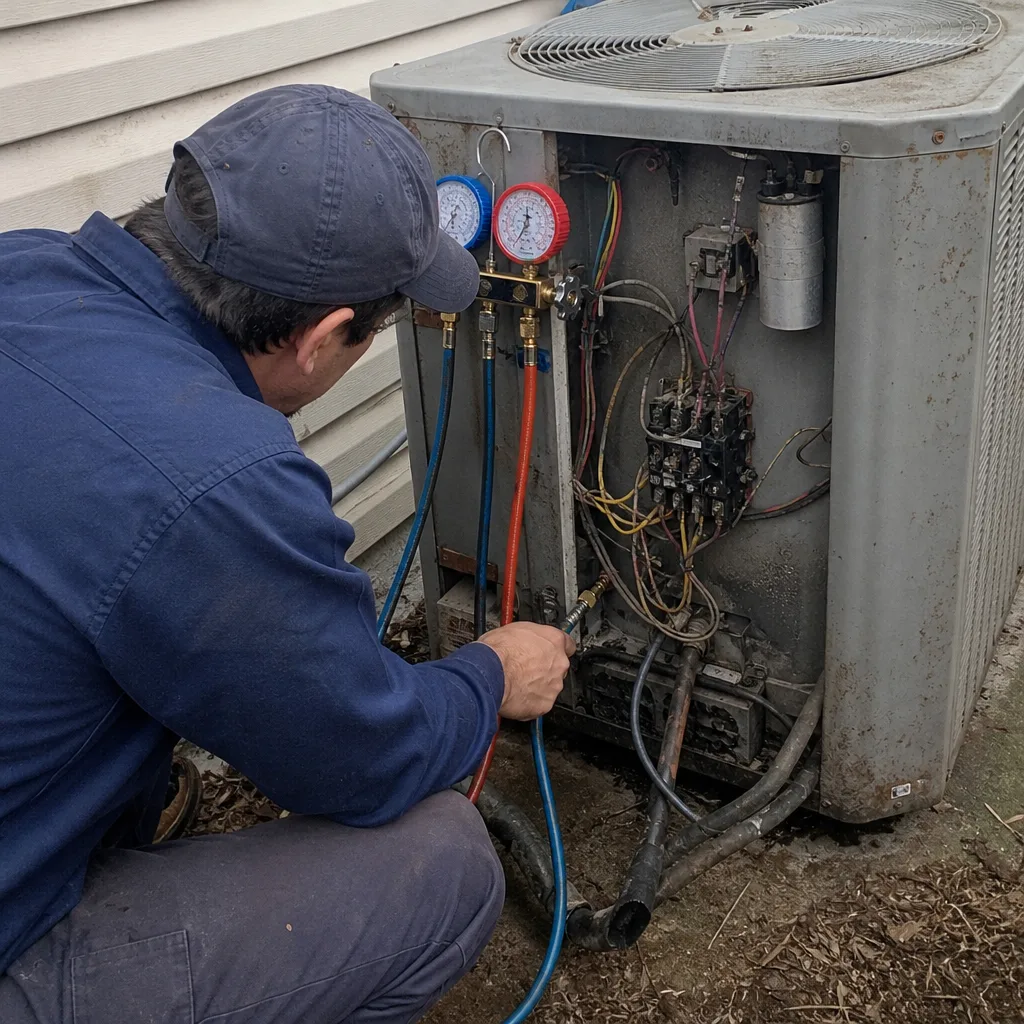 Before
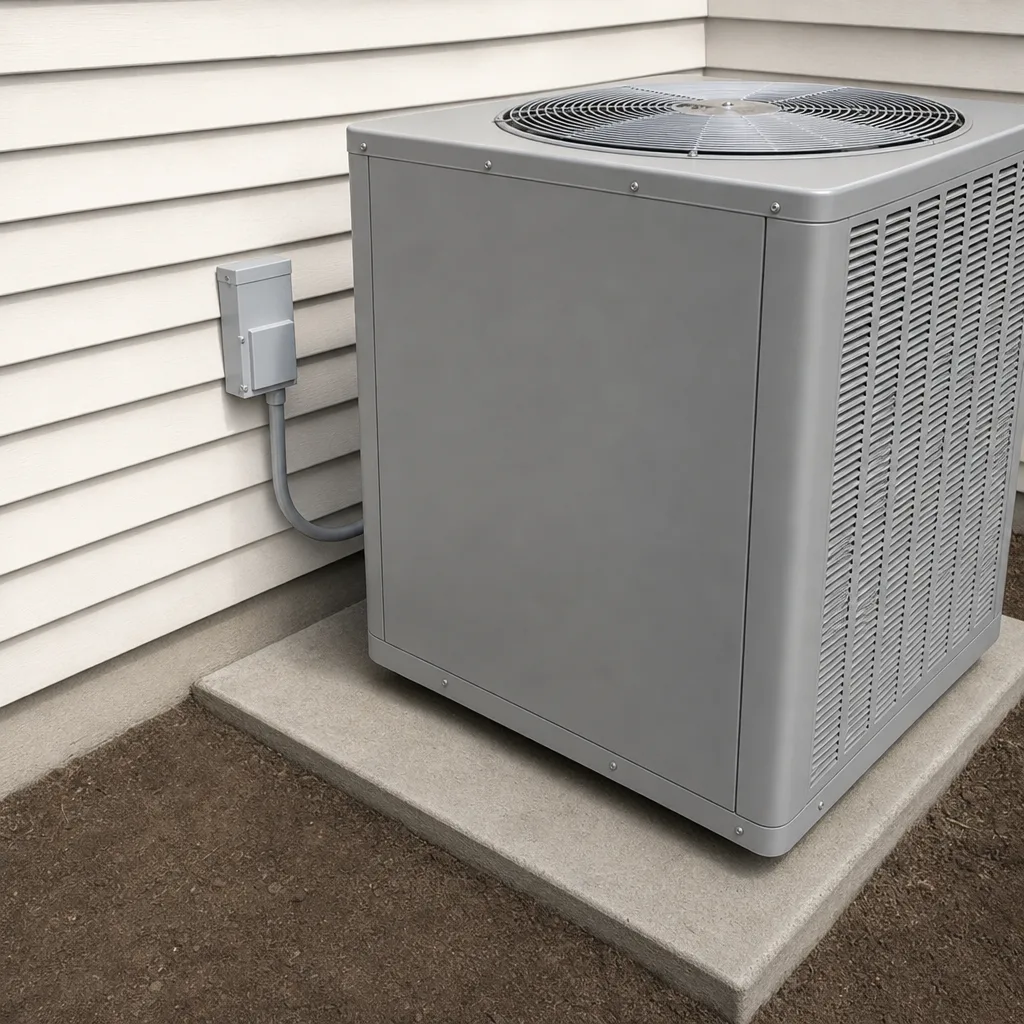 After
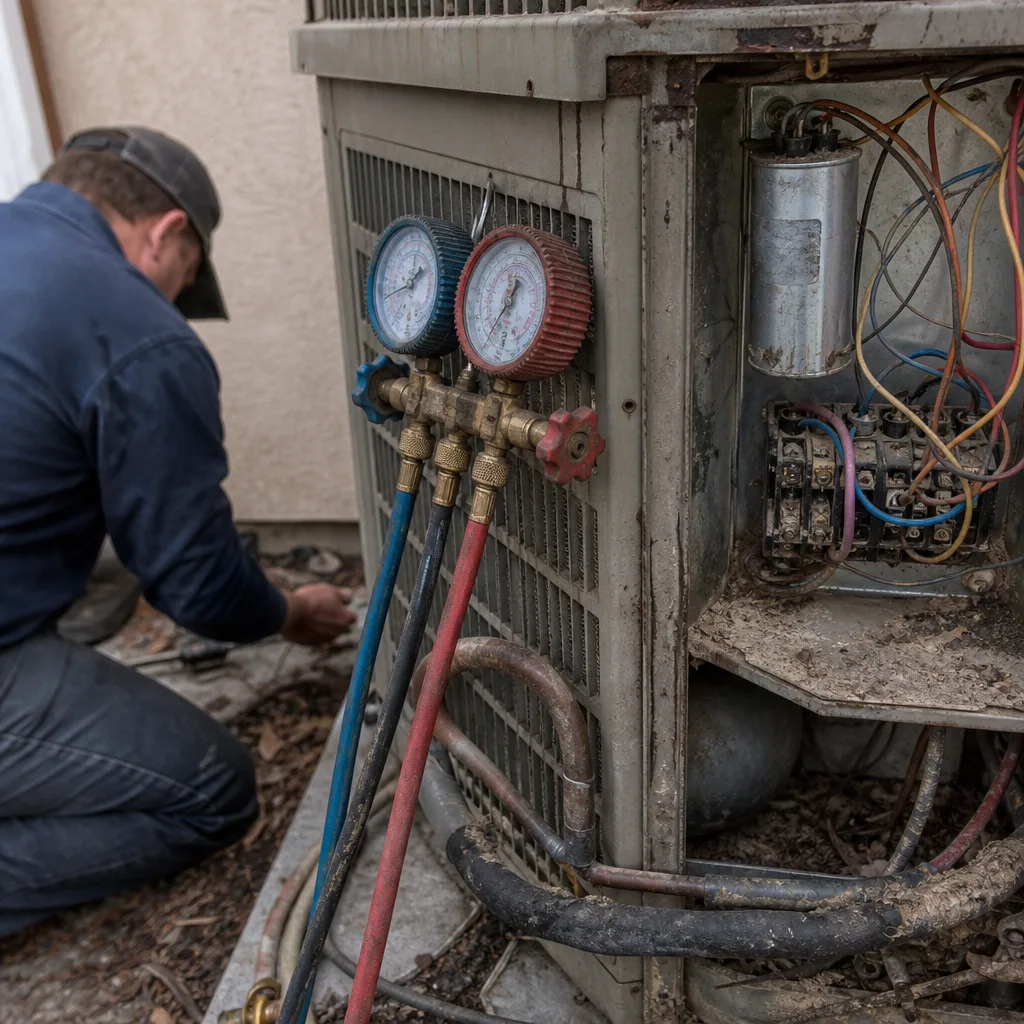 Before
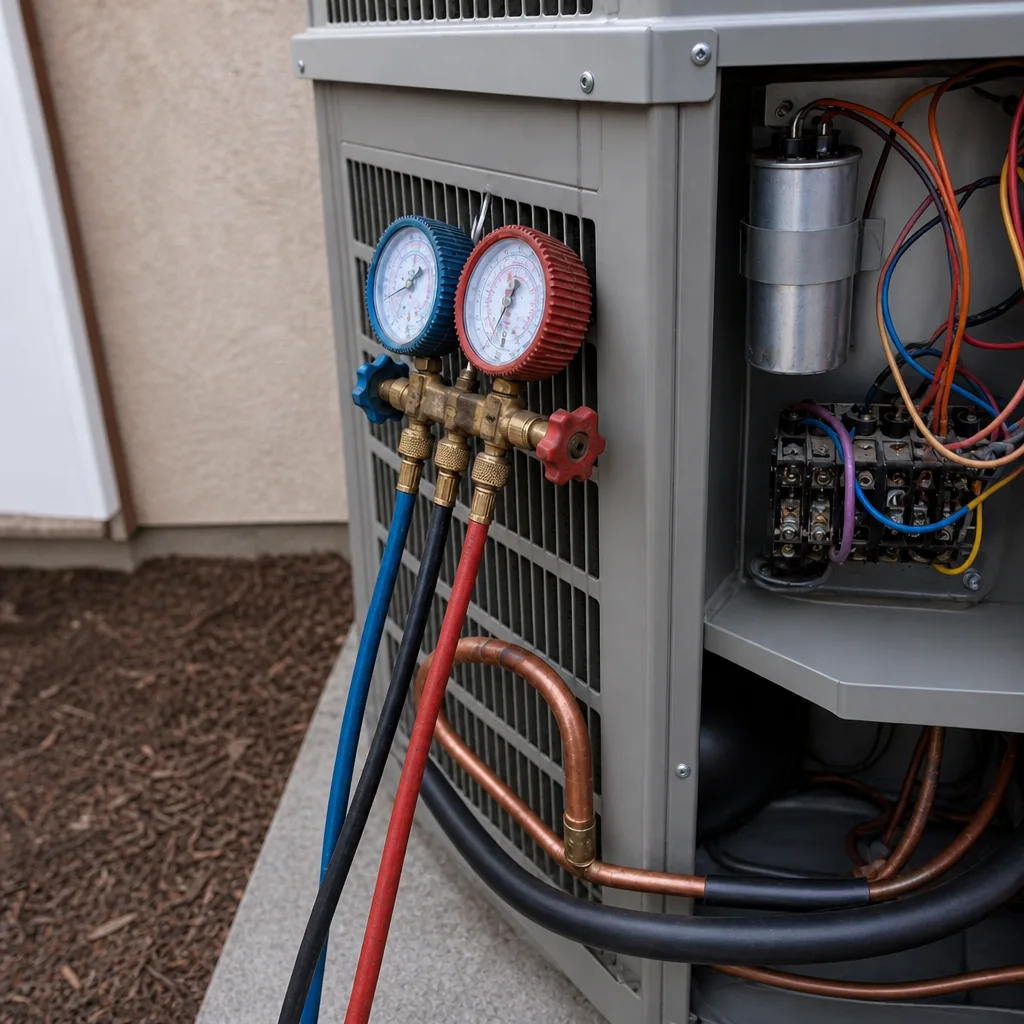 After
When to Call a Professional
A pattern of short cycling that’s new this summer, a breaker that trips more than once, a temperature split that’s dropped below the high teens, an outdoor unit that trips on high pressure during the hottest part of the day, or any repeated clicking or humming from the disconnect, all point to a system that’s failing right now. A single incident can wait until you’ve observed it twice. A recurring one can’t. Do not open the electrical panel, the disconnect, or the refrigerant circuit yourself. Those carry live voltage and refrigerant under pressure. We answer 24/7 at (888) 691-6715, and fast dispatch runs from 7am to 7pm, Sunday through Friday, so a call in the middle of a 108°F week gets booked into the next opening. Estimates are free, and the written estimate sets the final price before any work starts.
Frequently Asked Questions
The first sign is a temperature split that’s narrowing, meaning the air coming out of your supply vents isn’t as cold as it used to be relative to the air going in. It shows up weeks before the thermostat loses the house, and it’s measurable with a cheap thermometer. If you see it drop two or three degrees over a few weeks in Whitney’s summer, that’s the time to call, before the compressor does the failing for you. Call (888) 691-6715 for an exact diagnosis.
Short cycling is harder on the compressor in the short term because every restart pulls a current surge, while long cycling usually signals lost capacity from charge or airflow. Both shorten equipment life and both point to a problem worth diagnosing. The pattern tells the technician where to look first. If your system is doing either, call (888) 691-6715 and describe the run times.
You can check the temperature split, the supply vent temperatures, the breaker behavior, and the sound and feel of the outdoor unit from outside the cabinet. You cannot safely open the electrical panel, the disconnect box, or the refrigerant circuit. Those checks require a trained technician and proper gauges. Our technicians have up to 8 years of experience and can diagnose the problem on the brand already in your home, including York, Daikin, Bryant, and American Standard. Free estimates when you call.
Because the compressor’s current draw climbs with outdoor temperature, and a marginal capacitor or a dirty condenser coil can’t keep up in peak heat. A system that trips the breaker at 106°F but runs fine at 90°F is running past its limits, which means it’s already failing. Every reset stresses the compressor more. Call (888) 691-6715 before the next heat wave.
Two to six weeks is the typical window from the first measurable signal to a full failure in Whitney’s summer heat, which is why prompt diagnosis matters. Long cycling and a narrowing split are the earliest, breaker trips and high-pressure shutdowns come later, and total failure is last. Once the unit starts tripping on high pressure, the window is days, not weeks. Call (888) 691-6715 the same day you see it.
Repair usually wins if the warning sign is a capacitor, a contactor, low charge, or a dirty coil; replacement usually wins if the compressor is failing or the unit is past its expected service life. The written estimate tells you which. We don’t push a new system when a repair is the right call, and we don’t nurse a failing compressor when replacement is the honest answer. Call (888) 691-6715 for a free estimate in Whitney.
Maintenance is how you catch a narrowing split, a dirty coil, or a slow blower before they turn into a failure, so it genuinely reduces emergency repair frequency. It doesn’t prevent every failure. Nothing does. But it gives you the readings and the timeline, and that’s what turns a scramble into a scheduled repair. Call (888) 691-6715 to set up a maintenance visit.
We service Carrier, Trane, Lennox, Goodman, Rheem, York, Daikin, Bryant, and American Standard equipment, and we don’t push a single manufacturer. That’s the advantage of an AC-only specialist: the diagnosis is about your readings, not a brand alliance. Call (888) 691-6715 for free estimates.
The Bottom Line
The systems that fail hard in a Whitney summer usually warned you first. A narrowing temperature split, long cycling, a breaker that trips twice, high-pressure trips at 4pm on a 108°F day, and unusual stutter at the disconnect all show up weeks before the final failure. Watch them with a cheap infrared thermometer, note the trend, and treat them as a repair conversation while repair is still the answer. Maintenance is where this gets caught. If you’re seeing any of these signs, call (888) 691-6715. We answer 24/7, with fast dispatch from 7am to 7pm, Sunday through Friday. Estimates are free, and we’ll tell you honestly whether it’s a fix or a replacement.
Written by the team at AC Repair Whitney.